



By David Elliot
In my first essay on the debate over growth in Christian virtue, I gave a brief overview of one of the longest, most important, and yet oddly forgotten debates in the history of Catholic moral theology. [1]
The debate revolved around a cluster of related topics, such as what it takes to grow in Christian virtue, why we so often hit an impasse, and under what conditions we might hope to see moral progress. The debate itself concerned how hard or easy it might be to grow in virtue, and whether such growth was immediate or delayed. The last point was felt to be especially weighty. If growth in virtue does not follow a virtuous action at once, but is periodic and requires significant fervor, then, given that our time is limited, could many virtuous acts which deserve growth go unrewarded? These thoughts slid readily into concerns over the eternal reward. “He who sows sparingly will also reap sparingly, and he who sows bountifully will also reap bountifully” (2 Cor 9:6). Since the more advanced in grace and virtue “will see God the more perfectly” (Summa theologiae I q. 12, a. 6; hereafter ST) in heaven, the very quality of eternal happiness was at stake.
Outstanding luminaries of the Church’s great religious orders weighed in on these questions with trademark Jesuit, Dominican, Carmelite, and related positions, rightly aware that the pastoral implications were vast. Whether we should adopt a more moderate and gradualist model of Christian discipleship, or a more austere and urgent approach, effectively hangs on our answers to the above questions.
My first essay summarized the nature of this debate and surveyed the major positions. In this follow-up, I will focus not on whether growth is immediate or delayed but rather on the related question of how hard or easy it is to grow in virtue, and especially on what holds us back.
As noted in the first essay, the “acquired” virtues proportionate to natural flourishing are distinct from the “infused” or supernatural virtues proportionate to union with God. The latter are gratuitously poured into us by God (“infused,” from Latin infundere, “to pour into”) with sanctifying grace at baptism. [2] Equipped by God with these infused virtues, do we simply take over from there? Not at all. Even then we exercise virtues such as faith, hope, and charity only through grace further cooperating with us. God also elects to reward our virtuous acts in a way that befits them, and in that sense our good works “merit” further growth in virtue, as suggested in the Parable of the Talents. Crucially, this is true even of lesser acts of Christian virtue, not just outstanding ones.
So far, so good. Yet there are complicating factors. Virtues are not “substances” we enlarge but modifications of our human powers. When we say that virtues as complex qualities “increase,” we mean that the underlying power—whether the will, intellect, or appetites—is more thoroughly permeated by the virtuous quality, through a kind of moral acceleration. But unlike Francisco Suárez, S.J., St. Thomas holds that God does not immediately cause this growth if our own efforts are done with “tepidity or slackness” (ST II-II q. 24, a. 6).
But why are we prone to tepidity, and how hard is it to emerge from it? Initially this may not seem to pose much difficulty. Virtue, after all, is like “a second nature” (ST I-II q. 56, a. 6). One sign that we have it is that we do good with characteristic ease, promptness, and pleasure (ST I-II q. 107, a. 4). Like a great musician or athlete, the virtuous can “make it look easy.” At the same time, St. Thomas says that even the virtuous face an arduous struggle against temptations and the like. He quotes the famous, daunting line from Job: Militia est vita hominis super terram (“man’s life on earth is warfare,” Job 7:1). [3]
So how do we reconcile these two points? St. Thomas clarifies that virtue does conduce to good acts and imparts a kind of moral dexterity, but nonetheless certain “impediments” (impedimenta, ST II-II q. 184, a. 3) external to virtue may hinder its action. The word impedimenta can refer to soldiers’ “baggage,” which notoriously obstructs their freedom in battle (see Caesar, Gallic War, Bk II, c. 17). The “good soldier of Christ” (2 Tim 2:3) likewise acts virtuously, but he may be hindered by moral impedimenta. Yet we tend to slur over what particular factors have this effect. Just as modern readers of the Iliad may skip past the “Catalogue of the Ships” in Book Two, we often rush past the moral dramatis personae which impede virtue.
The Catholic tradition gives a full and rich accounting. We cannot dilate here on the full cast, but the following impedimenta must be mentioned. First of all, “temptation is from a threefold source,” as St. Thomas observes, “the flesh, the world, and the devil” (ST III q. 41, a. 1, ad 3). The “flesh” does not refer to the body, but to the tendency of the sensitive appetites after the Fall to depart from the order of reason. Likewise, the “world” refers not to “the green smiling earth,” [4] but to fear of persecution, the inordinate love of riches, honors, fame, and the like. The devil, presumably, needs no introduction.
In addition to this triplex hostis, it would be difficult to overstate the importance of the seven capital vices (popularly known as the “deadly sins”) in the tradition. [5] In the De Malo alone, St. Thomas devotes eight large questions (close to 100 pages in the Mandonnet edition) to their discussion. The capital vices are the original slippery slope. Their hallmark is that each operates as a kind of head (caput) or malign leader (dux) which shunts us toward other vices (compare the phrase “gateway drug”). As with the world, flesh, and the devil, their recurrent temptations can interfere with our virtuous acts even when we do not yield to the vice. Suppose I do not succumb to an impulse to envy or wrath, but I beat it off reluctantly. My lackluster response may blunt my efforts at charity or patience, making them somewhat muted or half-hearted. Such virtuous acts, then, would be lukewarm or tepid: they are good so far as they go, and yet they are insufficient for growth.
Two items remain in my ersatz “Catalogue of the Ships.” The first is original sin itself. “‘A certain man was going down from Jerusalem to Jericho,’ that is, into the defect of sin, being despoiled of grace and wounded in his natural powers” (ST I-II q. 85, a. 1). For St. Thomas, we are allegorically the “man … beaten by robbers,” and the Good Samaritan is Christ. Even after baptism we remain homo infirmus, convalescents recovering in the “Inn” of the Church, and prone to moral weakness (Catena Aurea on Luke, c. 10, l. 10).
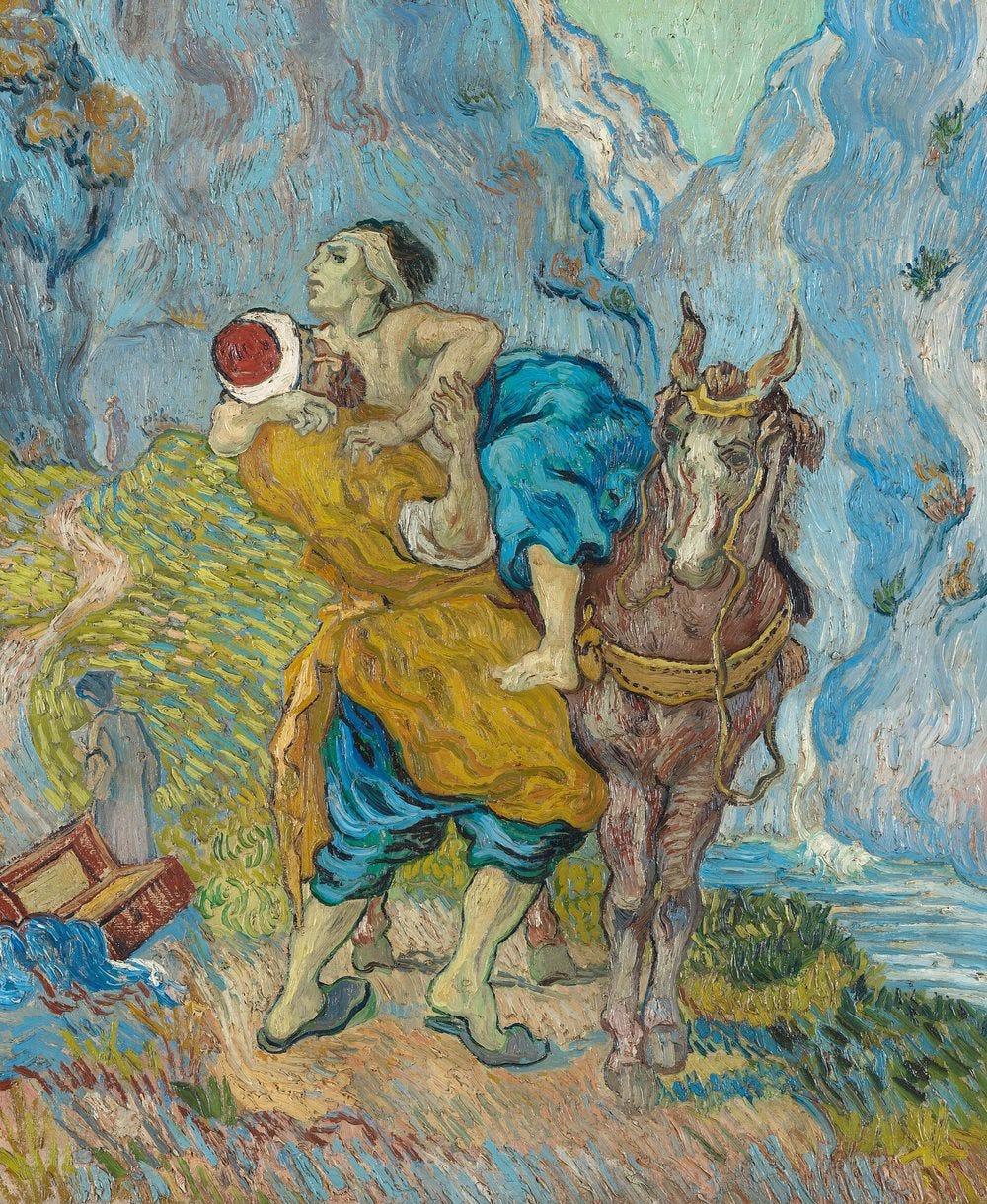
St. Thomas associates this indisposition with “concupiscence” or the fomes peccati (literally, the “kindling” or “tinder” of sin). Yet we should not conceive of original sin as an “evil gene” or some kind of dark matter in the soul. Rather, it is a privation—of “original justice,” that is, the pristine harmony we had with God in the beginning, the absence of which leaves within us a certain moral languor and inner division (“I see another law in my members, fighting against the law of my mind,” Rom 7:23). The lingering effects of original sin cannot be “cured” in this life, but happily they can be weakened, in proportion as we grow in virtue (ST III q. 15, a. 2).
My last item is the reliquiae peccati, or the “remnants of sin.” They are like a moral hangover from our past sins even after those sins are forgiven. Rather than full-fledged vices, they are “contrary dispositions,” and explain why even after Confession and absolution some might feel a “pull” toward their old ways. We, for our part, are told to “not turn back”; we should “remember Lot’s wife” (Luke 17:31–32). Boethius uses the Orpheus and Eurydice myth for a related warning, [6] and Dante is urged in the Inferno (in “veiled verses”) not to look back at the Gorgon’s head. [7] The reliquiae peccati pose the threat of relapse. In addition, while they do not diminish infused virtue itself, they do diminish its fervor.
The malignant dramatis personae sketched above tempt us not just to sins, which is obvious, but also, more subtly, to being “slack in doing good” through a certain reluctance and lessening of moral zeal. [8] (The Israelites who pined for the fleshpots of Egypt may not have turned back, but they did not hurry forward either; see Exod 16:3.) The danger is the kind of lukewarmness which hinders growth in virtue: [9] a state that can be very difficult to shake off. Hoc opus, hic labor est. [10]
But St. Thomas does not leave us without recourse. He calls us “soldiers” and assumes we will need “training” (exercitium or disciplina), lest we be like “raw recruits” in the “heat of battle.” [11] Elsewhere I have argued that St. Thomas outlined a very practical approach to our plight, which he called “spiritual training” (spirituale exercitium). [12]
What might this look like? Besides ordinary works of faith, charity, justice, and other virtues, we should counter the specific impedimenta that conduce to lukewarmness. To that end, St. Thomas advises an ascetic regimen of spiritual exercises. “We must recognize,” he quotes from Cassian’s Conferences, “that we have to undertake the hunger of fasting, watchings, bodily toil, privation, reading, and other acts of virtue, in order by these degrees to mount to the perfection of charity” (ST II-II q. 186, a. 1). He adds: “Fastings, watchings, meditating on the Scriptures … these are not perfection but means to perfection, since … we endeavor to ascend by these steps to the perfection of charity” (ST II-II q. 184, a. 3).
Rather than a “kitchen-sink approach,” we should operate with surgical precision and on a “contraries cure contraries” basis: identifying vicious tendencies and countering them with the forceful practice of the opposite virtues. For example, almsgiving against avarice, fasting against lust and gluttony, meditation against sloth, and so forth. If undertaken with the seriousness and consistency needed to constitute a real “training,” such exercitia, aided by grace, help remove the reliquiae peccati and other accumulated moral detritus that clog the flow of virtue like dead leaves in a gutter. By St. Thomas’s lights, this is a very effective remedy for the lukewarmness that holds growth in virtue back.
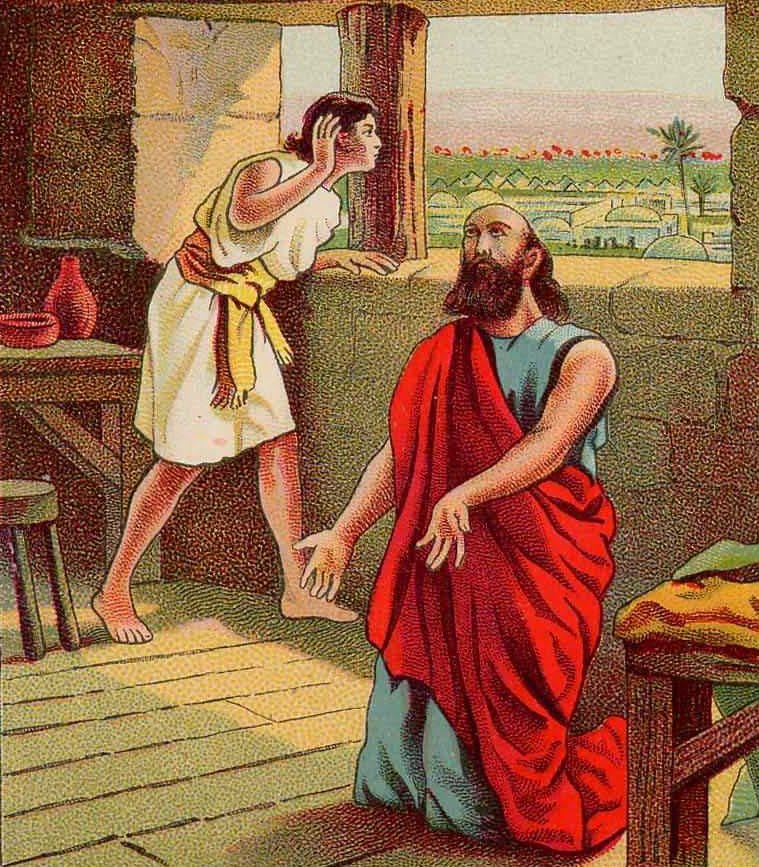
When the servant of the prophet Elisha “rose early in the morning,” he beheld “an army with horses and chariots” sent to hunt them down. The servant panicked: “Alas, my master! What shall we do?” But Elisha assured him: “Fear not, for those who are with us are more than those who are with them.” Elisha prayed that the servant’s eyes be opened, “and he saw; and behold, the mountain was full of horses and chariots of fire round about Elisha.” They were, in fact, bristling with divine protection (2 Kings 6:15–17).
St. Thomas likewise depicts us as besieged. Does he also convey the sense that “those who are with us are more than those who are with them”? He most certainly does, and in terms that are anything but vague. In the next essay I will take this up. Alongside “spiritual training,” the Angelic Doctor proposes a uniquely potent resource for getting past lukewarmness and prompting growth in virtue, one whose causality exceeds ordinary expectations. Perhaps unsurprisingly, that resource is the suite or ensemble of the Church’s sacraments, and the Eucharist—the Salutaris Hostia—most of all.
David Elliot holds the Grace P. Hobelman Chair in Catholic Moral Theology at The Catholic University of America and is an Associate Editor of the American Catholic Quarterly Review.
NOTES
[1] David Elliot, “The Lost Debate over Growth in Virtue,” American Catholic Quarterly Review.
[2] See Catechism of the Catholic Church, nn. 1999–2000.
[3] St. Thomas Aquinas, Super Col., Prologue.
[4] St. John Henry Newman, “Saintliness the Standard of Christian Principle,” in Discourses Addressed to Mixed Congregations, p. 83.
[5] See Catechism of the Catholic Church, n. 1866.
[6] Boethius, Consolation of Philosophy, Book III, m. 12.
[7] Dante, Inferno, canto IX.
[8] De Malo, q. 3, a. 13, ad 3.
[9] Ibid.
[10] Virgil, Aeneid, Book 6, ll. 126–129.
[11] Contra retrahentes, c. 6.
[12] Most points from this essay are stated in fuller form in my “‘Spiritual Training’ and Growth in Infused Virtue: Aquinas’ Model in Historical Context,” Studies in Christian Ethics 36.2 (May 2023): 287–310; “The Three Degrees of Charity: St. Thomas’ Itinerary of Infused Virtue Growth,” in Aquinas at 800: Commemorative Studies 1225–2025, ed. Therese Scarpelli Cory, William C. Mattison III, et al. (Washington, DC: The Catholic University of America Press, forthcoming January 2027); and “Perfection and the Problem of Lukewarm Charity,” in Law and Virtue, Nature and Grace: Engaging the Work of Jean Porter, ed. William C. Mattison III and Joseph Capizzi (London: T&T Clark, October 2026).
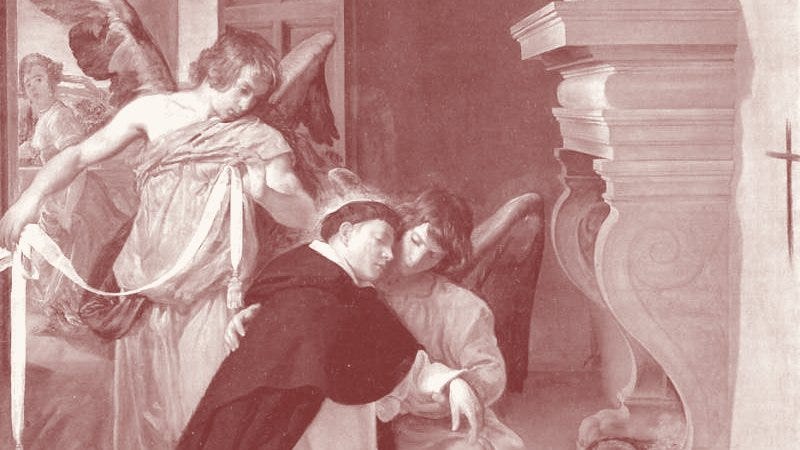
Cover: Diego Velázquez, The Temptation of St. Thomas Aquinas (detail), 1632, Museo Diocesano de Arte Sacro, Orihuela; Wikimedia Commons.