


Editor’s note.
The re-launching of the ACQR has been a great success. We are now into our third week. In the first week, we announced the Review, re-publishing the Salutatory from the Review’s original launch in January 1876.
In our second week, we featured Orestes Brownson’s last essay, “The Philosophy of the Supernatural,” from the first issue of the Review. Already in that very first week we brought out our first new contribution—an appreciation of Brownson’s political philosophy, by Michael Lucchese.
This week we feature a new essay by our own Associate Editor, David Elliot.
And you won’t want to miss next week, which will be devoted to Fulton Sheen.
Here is Dr. Elliot’s fine essay.
The Lost Debate Over Growth in Virtue
by David Elliot
Academic debates which seem endlessly fascinating and all-consuming to their field often blaze for some time and then fade out, like brilliant but temporary solar flares. Amid generational turnover and shifting trends, a question around which a host of scholars concentrate (“like frogs around a pond,” Plato, Phaedo 109b) may gradually become relegated to the footnotes and finally forgotten.
However, sometimes we discover intricate debates which last whole centuries in a kind of intellectual arms race which builds to amazing complexity and then suddenly vanishes with little trace. A debate like this is less like a solar flare than a great supernova, whose dazzling career ends in a black hole.
In the history of Catholic moral theology and of Christian ethics, I know of just one such debate, namely, the vast, sprawling, and immensely sophisticated argument over the nature of growth in Christian virtue.
The debate concerned what exactly is required for a Christian to grow in virtue, and when one might expect to see progress in virtue taking place. These questions were believed to have eternal stakes. The various attempts at their resolution implied very different models of Christian discipleship.
Few have heard of this debate today, but it occupied the Church’s finest moral thinkers for whole centuries during which the talent pool was remarkably deep.
While the groundwork for the debate was laid in the 13th century, it reached its zenith between 1580 and 1750, particularly in Spain, with France in a supporting role. The Church’s major religious orders were eager parties to it, complete with trademark Dominican, Jesuit, Discalced Carmelite, and related positions. Waning around the French Revolution, the debate re-emerged with great vigor around Pope Leo XIII’s encyclical, Aeterni Patris, before it vanished in “the Great Forgetting” of so much other earlier theology that was well underway by the 1970s.
In a short series of articles here at the ACQR, I will trace the contours of this important debate. In this first installment, I will give a brief sketch of the general terrain. In subsequent entries, I will focus on the salient details.
The debate involves several interrelated questions. The Christian goal is to “be perfect as your heavenly Father is perfect” (Matt. 5:48), and Christians do this “by progressing in virtue” (ST I II q. 98 a. 5 ad 3) through God’s grace assisting their moral exertions. At issue are seven virtues, which come in two modes. There are natural or “acquired” virtues, gained through long effort and directed to earthly flourishing. These principally concern the four “cardinal” virtues of justice, prudence, fortitude, and temperance. Then there are the supernatural or “infused” virtues, bestowed by God’s grace (e.g., at baptism) and directed to perfect beatitude in God. They include the three “theological” virtues of faith, hope, and charity (the greatest virtue), together with distinctly supernatural forms of the cardinal virtues.
It is hard to overestimate the importance of these seven virtues in the Catholic moral tradition. The largest part of St. Thomas Aquinas’ Summa theologiae is structured around them. They are staples of medieval and later art, which may depict them, for example, as seven branches on a mighty tree, or as seven great patrician ladies. Famous examples include Raphael’s great fresco, The Cardinal and Theological Virtues in the Vatican Museums, and the seven ladies surrounding the triumphal chariot of the Church in Dante’s Purgatorio (XXIX).

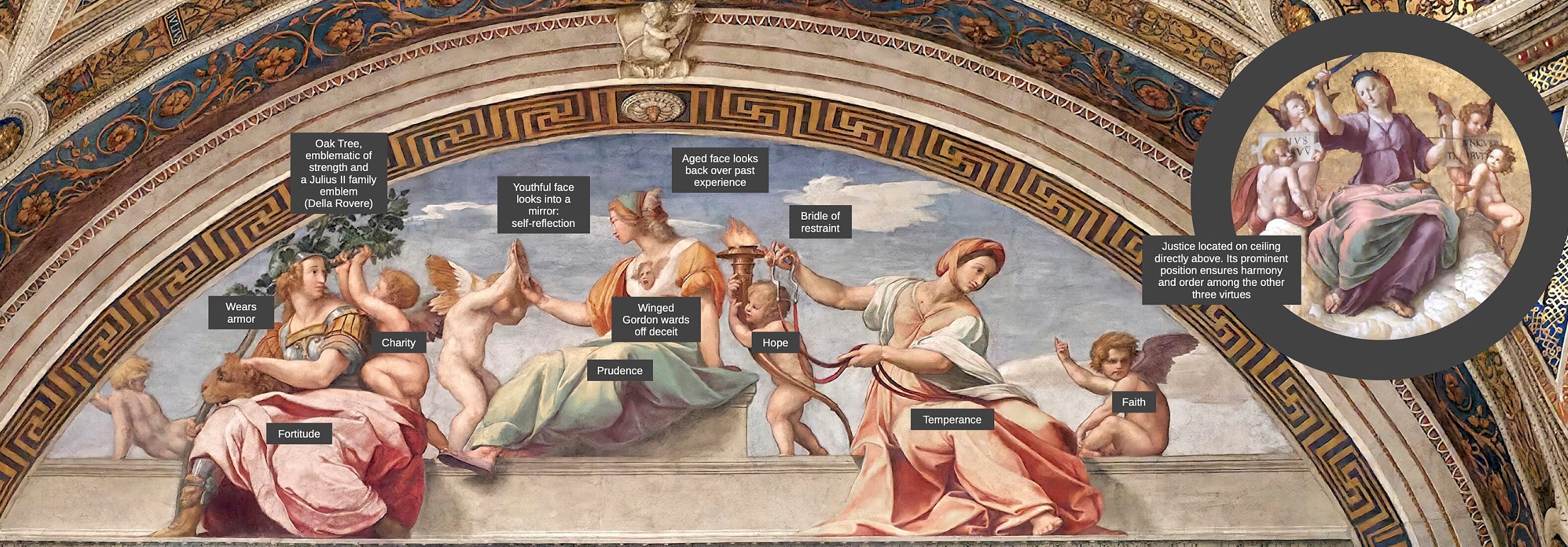
Growth in these distinctly Christian virtues is just about the most important practical consideration a Christian could have, for two reasons. The first is that the whole process of sanctification is proportionate to our growth in grace and the infused virtues, with the “heroic” virtue of the saint being the highest form. The Christian is homo viator: the human wayfarer, traveler, or pilgrim who is in via (“on the road”) through this world to attain God in heaven or in patria. For St. Thomas, we progress in via and grow closer to God precisely by growth in these virtues (ST II II q. 24, a. 7).
The second reason is that among the saved who arrive in patria, there are gradations of reward: “he who sows sparingly will also reap sparingly, and he who sows bountifully will also reap bountifully” (2 Cor 9:6). Led by charity, the soul which possesses greater infused virtue “will see God the more perfectly, and will be the more beatified” (ST I q. 12, a. 6). The beatific vision of St. Francis of Assisi will be different from that of a cruel murderer turned death-bed penitent who dies with almost no good works. The differing spheres of Paradiso, from the lower Moon to lofty Jupiter, capture poetically this principle of gradation in reward.
To grow in Christian or infused virtue, one must be in a state of grace (“sanctifying grace”). As concerns our moral efforts, growth takes place through cooperative grace and the attainment of merits. Like the man who uses his five talents well and receives five more, so likewise, St. Thomas says in his commentary on Matthew (as reported, C25.L2.n2071), that when “the Lord gives virtue, and you are diligent to use it well,” you “increase.”
But what counts here as “using one’s talent well”?
Unlike some contemporaries, St. Thomas took the generous view that God rewards even mediocre merits with some growth. But then, how do we account for the fact that even good Catholics may hit a moral plateau and seem to lack consistent growth? As the Imitation of Christ laments: we often “feel that we were better and purer in the first fervor of our conversion than we are after many years in the practice of our faith.” I may be a fairly devout churchgoer and decent neighbor in a state of grace who performs genuine if unremarkable acts of modest virtue. But after years of this, I may feel that, while I may be no worse, I am probably no better.
St. Thomas seems to resolve the difficulty when he holds that even a modest act of Christian virtue “merits an increase of charity; yet this increase does not take place at once, but when we strive for that increase” (ST II II q. 24, a. 6). Fervor acts like a growth stimulant. The virtues must be disposed for increase by more fervent conduct before we actually receive that growth from God. Thus, a man of one talent may have merited a second talent, and yet will not yet have received it, like a minor who is the beneficiary of funds withheld in trust. Even virtuous Christians whose good works merit increase will in this way routinely experience a time lag in virtue growth.
St. Thomas even held that infallibly we will receive at some point the growth which we merited, unless we forfeit it through mortal sin and damnation (ST I II q. 114, a. 8). Yet he notes that the man of lukewarm virtue is more likely to “rest in his state” and is not “easily carried toward better things” (De Malo q. 3, a. 13).
Therefore, the question arises: What if I settle for years of mediocre virtue and never “strive for… increase”? By my lack of fervor, I did not receive all of the growth in virtue I had merited. If I die in such a state, will I forfeit the growth that would have made my union with God more perfect for all eternity? If so, has the laborer been defrauded of his wages (see Lev 19:13)?
The great Jesuit scholastic, Francisco Suarez, proposed a controversial solution. He argued that the growth which follows upon virtuous acts is not delayed but received immediately. Suppose that, on Tuesday, I am charitable to a tiresome student, say my prayers, and take out my elderly neighbor’s trash: I receive the reward of growth in virtue, Suarez would claim, that very Tuesday.
We thus have two growth models. On the one hand, St. Thomas foresees intermittent growth spurts following increased fervor, like the periodic shifting of icebergs during a summer melt. On the other hand, Suarez foresees immediate even if modest and gradual growth proportioned to our efforts, like adding stalks of grain to a pile of wheat day-by-day.
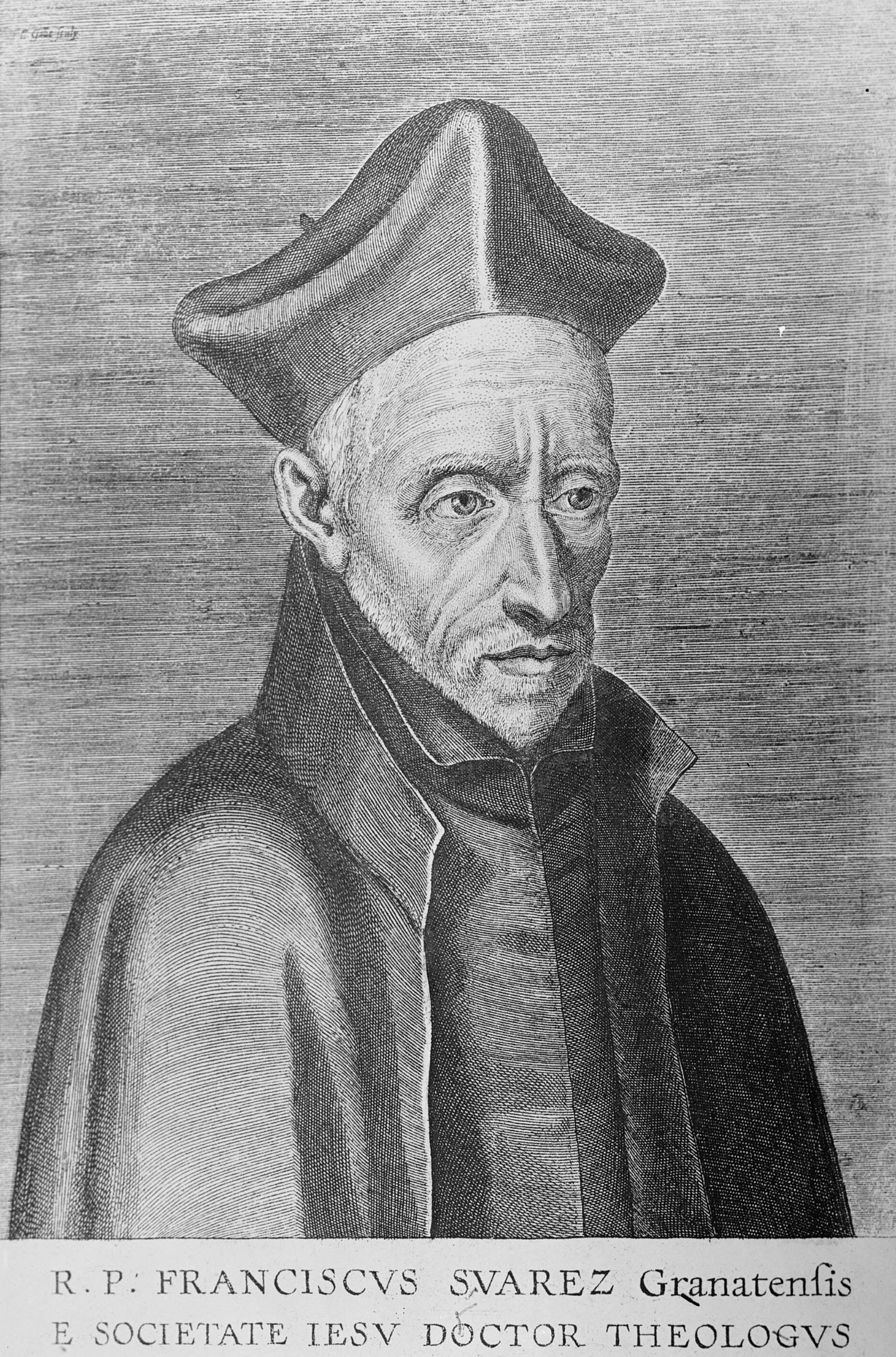
Admittedly, the streamlined economy of the Jesuit model removes the tensions caused by a delayed growth model. But Thomists (among whom I count myself) object that this model fails to account for how a virtue as a habitus needs to be properly disposed for growth by more intense activity.[1] There is the further problem of Christians who do modest good works over years but do not really seem to be progressing—whereas they should show evident progress, on Suarez’s model.
The Jesuits in general and many early and later modern scholastics adopted Suarez’s view, while the Dominicans, Discalced Carmelites, and others held to the Thomistic line.
But although Thomists presented a united front in relation to the Suarezians, they nonetheless disagreed among themselves over what to make of growth in virtue which is merited in this life and yet not received before death.
A major fault line rapidly emerged among Thomists, which endured for centuries. Some argued that growth which was merited but never received was essentially forfeited. The idea was that: Ubi cecidit lignum, ibi erit (‘where the tree falls, there it lies’ [Eccl 11:3]). Such a view has a bracing pastoral upshot: we must shake off our complacency and kindle our zeal while we still have time. Advocates of this “strict” Thomist position included Domingo Báñez (1528–1604), Vincent Contenson (1641–1674), Louis Billot (1846–1931), and others, with possible support from Cajetan (1469–1534).
By contrast, other Thomists held that, although of course we can no longer merit growth in virtue after death, nothing hinders us from receiving it, such as following a very intense act of charity in Purgatory, or just before the first moment of glory. (If the former, the act of charity would be the occasion for the reception of the growth; it would not merit that growth.) Within this camp were John of St. Thomas (1589–1644), the Discalced Carmelites of Salamanca (the Salmanticenses, 1631–1712), Charles René Billuart (1685–1757), and others.
The school of Thomists was vexed for centuries over these debates, not solely the debates with the Suarezians, but also among themselves. “It is amazing how much this torments expositors of St. Thomas,” admitted John of St. Thomas.[2]
One reason the debate was felt to be so important is that each of these positions deeply affects one’s model of Christian discipleship. All three models—the Jesuit and two Thomist variations—prize zeal and moral progress. All three have a magnanimous air to them. But they have distinctive bases of attraction. The Jesuit position allows for greater patience with imperfection. The “moderate” Thomist position can hope for delayed gains after this life. By contrast, the “strict” Thomist position has more of an all-or-nothing approach, stressing that we need to spiritually wake up and move out of our comfort zone lest we forfeit our unallocated “talents” and it be said of us: Dormierunt somnum suum et nihil invenerunt omnes viri divitiarum in manibus suis (‘They have slept their sleep; and all the men of riches have found nothing in their hands,’ Psalm 75:6).
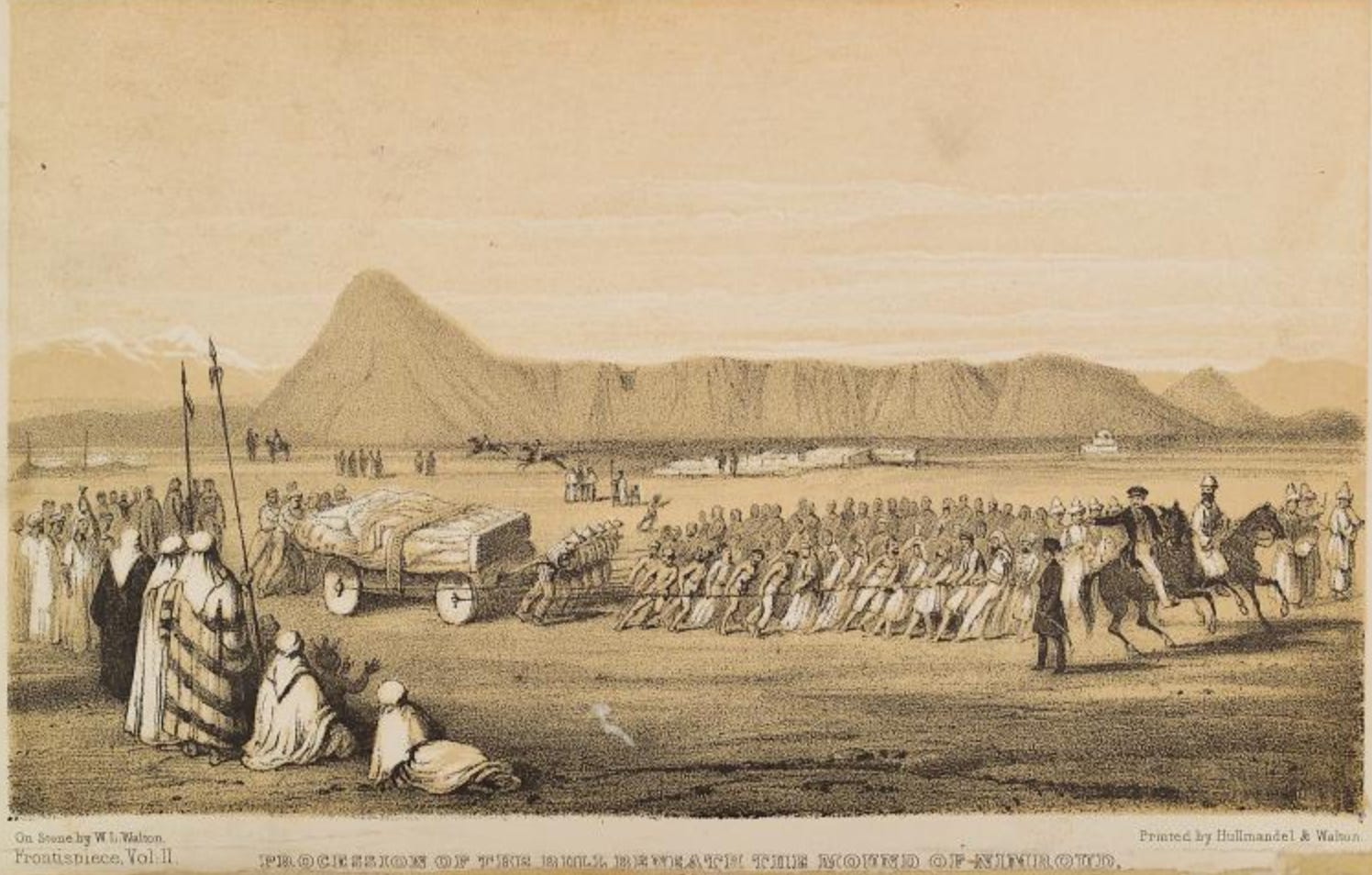
The night before Sir Austen Henry Layard excavated the lost ruins of Assyria and began to find their priceless treasures, he had a striking dream: “Visions of palaces underground, of gigantic monsters, of sculptured figures, and endless inscriptions floated before me.”[3]
One can see how this debate over how precisely Christians grow in virtue, with its vivid and seemingly arcane features, lies analogously lost and buried in our own history. It likewise conceals treasures of great value.
Having now laid out the parameters of the debate, in subsequent entries I will discuss its fascinating contours in greater detail, the historical tapestry of which they are a part, and the pastoral implications which lie so suggestively behind each model.
[1]See my “Perfection and the Problem of Lukewarm Charity,” in Law and Virtue, Nature and Grace: Engaging the Work of Jean Porter, ed. William Mattison and Joseph Capizzi (T. & T. Clark, forthcoming, Oct 2026).
[2]John of St. Thomas (Joannes a Sancto Thoma [John Poinsot]), Cursus Theologicus, Tomus Septimus, I, Disputatio IX, a. IV (Lyceum Inst, New York, 2023), p. 450.
[3]Sir Austen Henry Layard, Nineveh and Its Remains, 1849.
Dr. David Elliot, Associate Professor of Moral Theology, and the Grace P. Hobelman Chair in Catholic Moral Theology at The Catholic University of America, is a Gibbons Institute Fellow in the Houses of Social Thought and Beauty & Culture, and an Associate Editor of this Review.