“We shall on resuming the subject endeavor to show the relation of each particular doctrine of the Church to the Incarnation, and make good the several positions thus far assumed.” These seem to be the last published words of Orestes Brownson, the closing words of his essay, “The Philosophy of the Supernatural,” which the revived ACQR is pleased to republish this week. Fittingly, they make a promise.
Our plan here is as follows. Today, we present for you a series of excerpts from that essay, which functions as a précis. We are busy people. The original essay was 5400 words. The précis is a bit over 1000. You will get the gist by reading the précis.
On Tuesday, we are pleased to run a commentary on Brownson’s essay by our esteemed Associate Editor, Dr. Joshua Benson.
On Wednesday we will republish the whole essay. On Thursday I will add some reflections of my own, and on Friday we will publish the first submission which this revived ACQR has been pleased to receive, on Brownson.
And who knows, maybe in a future week we can attempt to make good on that promise.
What means nothing is nothing
Philosophy is the science of principles; not, as the superficial thinkers or unthinkers of our materialistic age would have us believe, of sensible or material facts, the proper object of the physical sciences, as astronomy, electricity, chemistry, mechanics, geology, hydraulics, etc. Principles precede facts, originate and govern them. Indeed we know not facts themselves, nor understand their significance or meaning, until we have referred them to their principles.
All principles are supersensible and are objects of the intellect; in no case of the senses. Some of them are known or knowable by the light of nature; others only by the light of supernatural revelation. The science of the former is the philosophy of the natural; of the latter is the philosophy of the supernatural.
These two philosophies are of principles equally certain; for the light of reason and the light of revelation are both emanations of the divine light or Logos, and each is infallible. We may err and take that to be reason which is not reason, or that to be revelation which is not revelation; but neither can itself err, for both rest on the veracity of God, who is Truth itself, and can neither deceive nor be deceived.
The world outside of the Church may be credulous and superstitious, able, as Clemens of Alexandria said to the Greeks, “to believe anything and every thing except the truth,” but have undeniably lost all faith in the supernatural order, and really believe only in the natural, if indeed even so much as that.
The real cause of this unbelief, so far as it is intellectual, not moral, is in the assumption that the natural and the supernatural are held by the Church as by the sects to be two separate, independent, and unrelated orders, indeed as two antagonistic orders.
The natural and supernatural are two parts of one original plan of creation, and are distinguished only as the initial is distinguished from the teleological or completion.
To assume that man can be perfected in the natural order is to assume that he has no destiny, his existence no purpose, and therefore no meaning, which would be tantamount to assuming that he is a mere nullity, nothing at all.
There is and can be no natural beatitude; because, whatever is natural is finite, and the soul hungers and thirsts for an unbounded good, and can be satisfied with nothing short of the Infinite; that is to say, God Himself, who is the Supreme Good in itself. “I shall be satisfied,” says holy Job, “ when I awake in Thy likeness.” There is rest for the soul only in God.
We are laboring to prove that man, in point of fact, is and always has been under a gracious or supernatural providence, and, therefore, from the first destined to a supernatural end, attainable only through a supernatural medium. The original justice in which Adam was constituted, and which placed him on the plane of his destiny, was supernatural, not produced by his nature; and when by his prevarication he lost it, he fell below his nature, became darkened in his understanding, weakened in his will, and captive to Satan, from whose power he is delivered only by the Incarnate Word.
The Holy See has defined against the Traditionalists and Anti-Scholastics that the existence of God as well as the immortality of the soul and the free will of man can be proved with certainty by reason prior to faith, and I think I have fully proved that God is, in my “Essay in Refutation of Atheism,” published in the Last Series of Brownson’s Quarterly Review, … The principles of rational science, as the author of the work before us asserts, are all included in the ideal or rational formula, l’ Ente crea le esistenze, or Ens creat existentias [Being creates what exists]. We say nothing here as to the way in which the mind comes into possession of this formula, but this much we hold is certain, that there is no mental operation and no mind possible, without the principles summarized or expressed by it These principles connect all existences with God by His creative act, and consequently show that the natural is really related to the supernatural, for the Creator of nature is necessarily above nature, that is, supernatural.
As existences a contingenti [which are contingent] proceed from the supernatural, mediante [by means of] the creative act of God, it follows that the assumption of unbelievers and modern infidel scientists is inadmissible, namely, that the natural and supernatural are two distinct, separate, and unrelated orders, and that the supernatural is not necessary to complete the science of the natural. The contrary is the scientific fact; and, as the natural does not and cannot exist without the supernatural, the science of the supernatural by divine revelation or otherwise is essential even to the science of the natural. There is no science without principles, and all principles are supernatural, even the principles of the natural order itself.
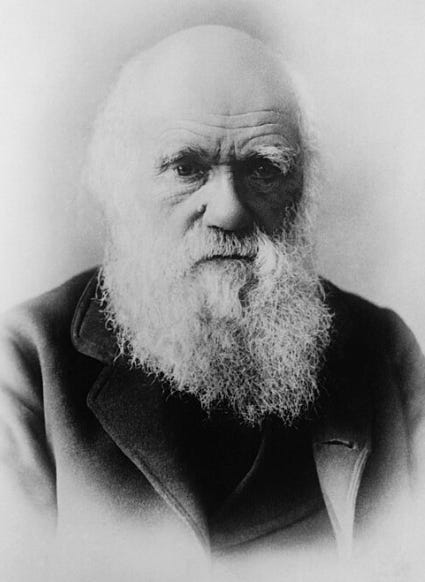
They who undertake to explain the cosmos by what they call natural laws, which are obtained by induction from the facts they observe, uniformly fail, and fall into the greatest absurdities, as we see in old Democritus and Epicurus, as well as in such miserable charlatans as Darwin, Tyndall, Huxley, and Herbert Spencer; because induction from facts gives only generalizations, classifications called natural laws, never transcending the region of facts or the particulars generalized or classified. It never gives us principles, which always precede the facts, produce, underlie and control them.
Those scientists, whether in ancient or modern times, who seek to explain the origin of things without the recognition either of one God or His creative act are worthy of no consideration, and may be set down as ignorant of the first principle of all science, and as perceiving no distinction between a principle and a fact, or a fact and a factor. The world is not eternal; for what is eternal is one, and immutable, and can not of itself change either in substance or in form.
The principle of theology, or what we here call supernatural philosophy, and known to us only by revelation, is, our author says, ‘The Father through Christ deificates or is deifying existences or creatures,’ that is, supernaturally elevating them to union or oneness with God, the creature to oneness with the Creator. The medium of this deification is the Incarnation, or the Word made flesh.
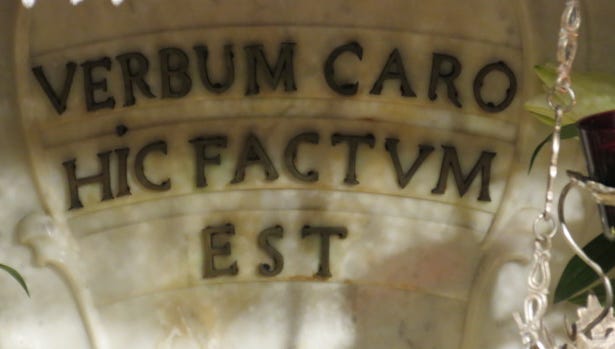
If the natural and the supernatural universe are homogeneous parts of one and the same system, the point on which we here specially insist, the whole of both parts have their unity in the principle from which they proceed, and as the natural is created and exists for the supernatural, it is integrated in the principle of the supernatural, Verbum caro factum est, or the Incarnation. Hence it follows that the entire creation, whether in the natural or supernatural, the initial or the teleological order, exists for the Incarnation, and finds in its relation to the Word made flesh its significance, its purpose, its unity, and its integrity.
This granted, it follows again that the denial of the Incarnation would be the denial not only of the entire supernatural order or the whole Christian system, but of all existences, whether natural or supernatural, by denying this final cause, as essential to any created existence as the first cause. It would deny the very end for which all things exist, and deny the universe itself, by denying it any purpose or meaning. What means nothing is nothing.
The Incarnation is the key to all the Creator’s works, and we have not mastered theology or the philosophy of the supernatural, till we are able to say that the denial of any one item in those works involves the denial of the Incarnation, or the Word made flesh. It is the highest and supreme principle of all science, and without it nothing in the universe is scientifically explicable. The greatest absurdity into which men can fall, is that of our modern scientists, who imagine that there can be science without theology, and who affect to treat theology as no science at all, but a vain imagination, or the product of a superstitious fancy.
All heresy impugns the Incarnation, and is of the nature of infidelity, or the absolute rejection of Christ, the Word made flesh.
We shall on resuming the subject endeavor to show the relation of each particular doctrine of the Church to the Incarnation, and make good the several positions thus far assumed.
O. A. Brownson