


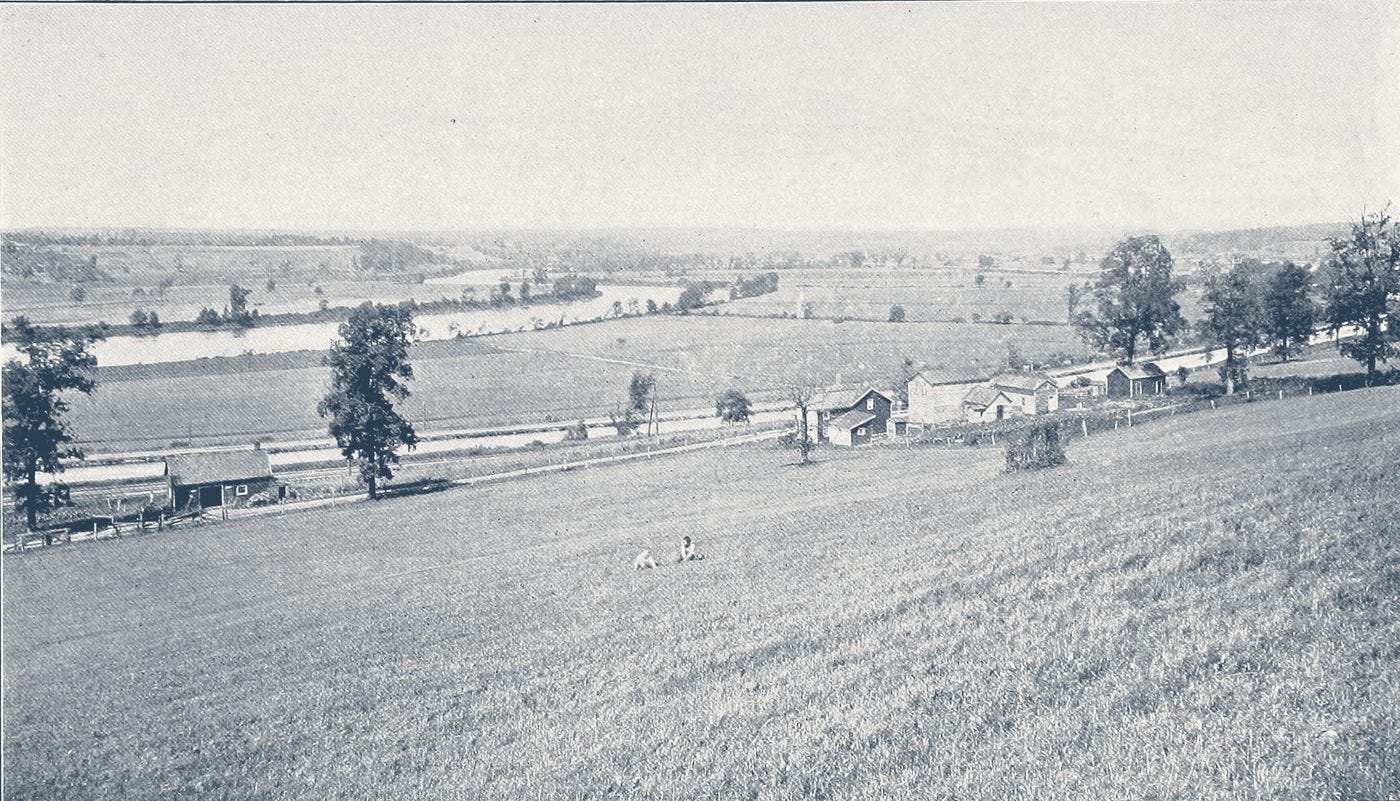
From the Editor. Today, October 19, the Church in the United States keeps the memorial of Sts. John de Brébeuf, Isaac Jogues, and their companions: six Jesuit priests and two lay helpers, killed between 1642 and 1649 in the missions of New France. Three of them, René Goupil, Isaac Jogues, and Jean de Lalande, died at Ossernenon, on the Mohawk River west of Albany, where the shrine at Auriesville, New York, now stands. Pius XI canonized all eight in 1930. They are the first canonized martyrs of our own soil.
When F. W. Grey wrote the account below for our number of October 1896, none of the eight had yet been beatified. Grey (1860–1939) was an English-born man of letters who taught English at the University of Ottawa. His essay reviews Father Camille de Rochemonteix’s three-volume history of the Jesuits in New France (1895), written from the archives of the Society, alongside the histories of Francis Parkman, whom Grey admires and corrects by turns. We reprint the part that tells of the Huron mission and its martyrs.
Grey printed his French sources without translation; “it has been thought best,” he says, “to give the exact words of the writer.” Accordingly, we have kept his French and supplied translations in brackets. We have omitted his footnotes and one passage on the obstacles the mission faced (marked by an ellipsis), and we have made the spelling of names uniform.
One detail from Grey’s notes deserves to be brought into the light. When Jogues returned to France in 1644, with fingers gnawed and cut away by his captors, Urban VIII gave him leave to say Mass with his maimed hands, remarking: Indignum esset Christi martyrem Christi non bibere sanguinem, “It would be unworthy that a martyr of Christ should not drink the Blood of Christ.”
THE JESUITS AND NEW FRANCE IN THE SEVENTEENTH CENTURY
F. W. Grey
American Catholic Quarterly Review, vol. 21, no. 84 (October 1896), pp. 743–750 (excerpt)
The “Huron mission” included the Tinnontaks, or Tobacco Nation, the Neutral Nation, so called because they had been able to maintain a state of strict neutrality between the Iroquois and the Hurons; further south, the Eries, or Cat Nation, akin to the Hurons in customs and language, long the terror of the Iroquois; further south again, on the Susquehanna, were the fierce and resolute tribe of the Andastes. “Our intention,” writes Bressani, “was to advance always towards the discovery of new peoples, and we hoped that a colony among the Hurons would be as a key to the position.”
The priests in charge of this mission were Jean de Brébeuf, “that masculine apostle of the faith, the Ajax of the mission,” as Parkman calls him; Charles Garnier, Joseph Marie Chaumonot, Noël Chabanel and Isaac Jogues. Pierre Chastelain, Paul Ragueneau, Simon Le Moine and others joined them later. It was no light task that they had undertaken. The very journey to be gone was full of dangers, for, in 1634, the war between the Hurons and the Iroquois was at its height, and beset by hardships and difficulties.
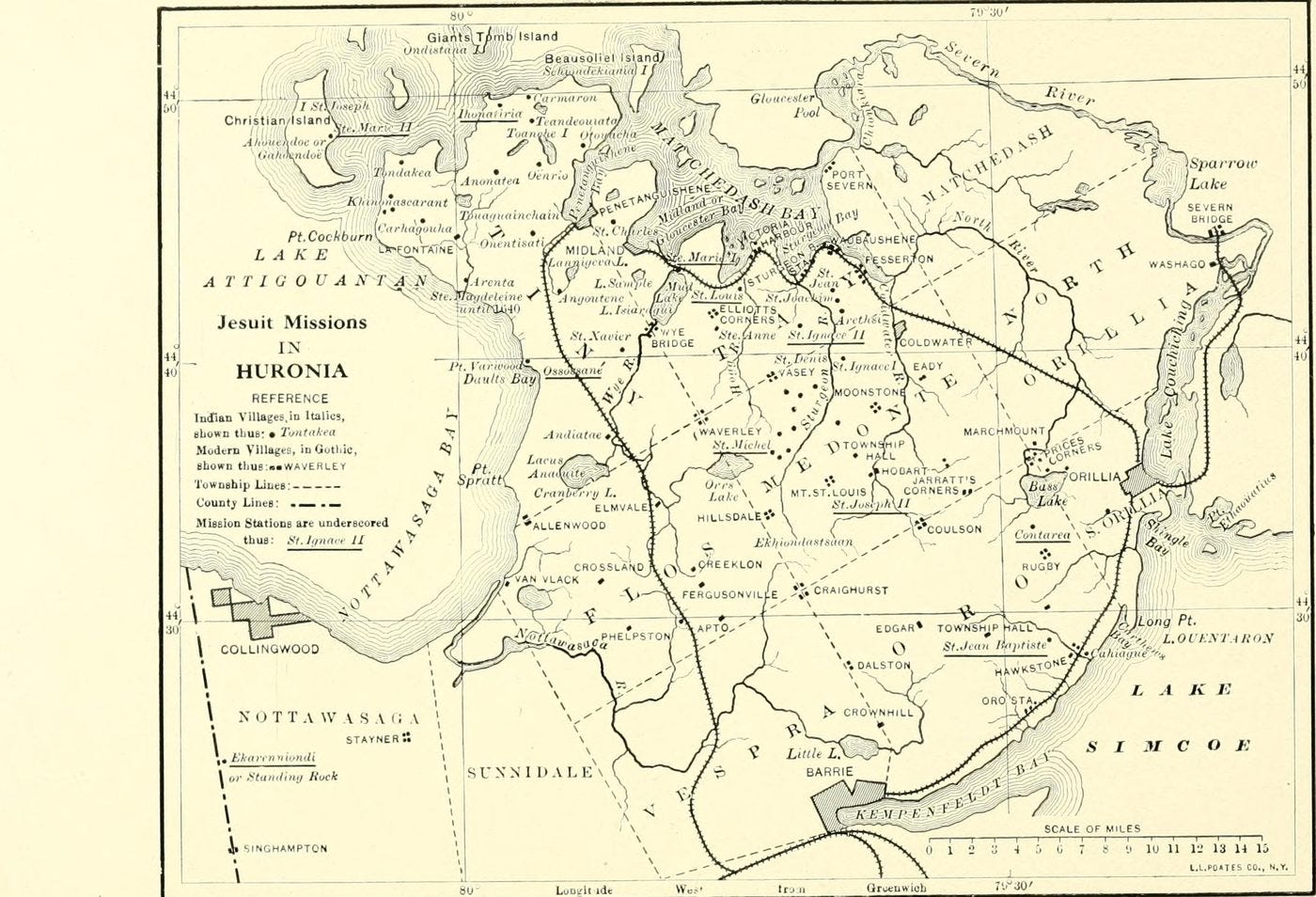
Bancroft, the American historian, thus describes it: “The voyage, by way of the Ottawa and its affluents, was one of more than three hundred leagues, through a fearful country, covered by forests. All day long the missionaries had to cross fords, or to work at the paddles. At night, no other nourishment than a meagre ration of Indian corn, mixed with water; for bed, the ground and the rocks. The canoe must be carried on the shoulders for several leagues, at thirty-five cataracts. . . . And thus, swimming, fording, dragging or carrying the canoe, their clothes torn, their feet bruised, the breviary hung round their necks, the missionaries traced their way, in spite of rivers, lakes and forests, from Quebec to the very heart of the Huron country.”
Truly, to enter on such a mission, a man “must make the sacrifice of his life.”
“Les miracles dans ce pays,” writes Father Jean de Brébeuf, “sont ceux-cy: faire du bien aux sauvages, souffrir bien des maux, et ne s’en plaindre qu’à Dieu.” [“The miracles in this country are these: to do good to the savages, to suffer many ills, and to complain of them to God alone.”]
These few words tell the whole story.
“This mission,” writes Father de Rochemonteix, “was well suited to this heart eaten up with holy ambitions, eager to do greatly and to suffer all things for the salvation of the peoples redeemed at the price of the Blood of Jesus Christ. And yet, the faith could not spread itself on the soil of New France, as he himself was to write one day, but by labors, by watchings, by tribulations and patience; the laborer will only reap after having long weeded and sown in tears and groanings.”
This was their true motive; this their chief object: the salvation of souls. All else is as nothing in comparison. That the plan, offering, as it did, material advantages, should have been favored by Champlain, for military and commercial, as well as political reasons, was to them merely an incidental circumstance. Had nothing of the kind transpired, they would have undertaken the mission just as zealously, Brébeuf having, in fact, spent some considerable time among the Hurons, in 1625, before the temporary cession of New France to England. That they should have been able to serve their country while serving God, doubtless gave them fresh courage and greater happiness, as it removed all possibility of opposition on the part of the civil authorities, who were always willing that the Jesuits should share the dangers and hardships of the colony, if they grudged them a share in its honors or its government.
“What was the life of the missionaries in these Huron dwellings from 1634 to 1639? Historians have spoken of it more or less; all have noted the characteristic of terrible austerity that particularly marked it. . . . In reading the Relations and the private correspondence . . . we understand how much of truth there is in these few lines of Father J. Lalemant: ‘On aimerait mieux recevoir un coup de hache sur la tête que de mener, les années durant, la vie qu’il faut mener ici tous les jours, travaillant à la conversion des barbares.’ [‘One would rather receive the blow of a hatchet on the head than lead, year after year, the life one must lead here every day, laboring at the conversion of the barbarians.’] This life,” adds Father de Rochemonteix, “was a veritable martyrdom from day to day.”
It would be too long to enter into the detailed history of this mission, from 1635 on to the “opening of the era of martyrs in 1646.” Father de Rochemonteix’s account, like that of Parkman, is full of the deepest interest.
. . .
[The mission] meant martyrdom, and they knew it. The roll of immortal honor begins with that of Isaac Jogues, who, when his French and Huron fellow-voyagers, the latter mostly Christians, were surprised and taken prisoners by the Iroquois on Lake St. Peter, on August 2, 1642, “listening only to his apostolic heart,” says Father de Rochemonteix, gave himself up as a prisoner, of his own accord, knowing perfectly well what such a captivity must entail. His martyrdom lasted for twelve months, and must be read, either in the account given by Parkman or in that of Father de Rochemonteix, in order that it may be realized in some faint measure. He was a prisoner in the hands of the Iroquois, and every insult, every indignity, every devilish torture they could invent, short of actually killing him, he underwent, from day to day, with a courage that won the admiration of his tormentors, even while it increased their fury. “In his days of comparative liberty,” writes Father de Rochemonteix, “he could easily have escaped. He did not do so, although condemned to a life more painful than a thousand deaths.” . . . Further on, he says: “God blessed so great a zeal. ‘Not counting the French and Huron prisoners whom I have helped, consoled and confessed, I have regenerated,’ he says, ‘in the sacred waters, seventy persons, children, young people and old people of five nations and different languages.’”
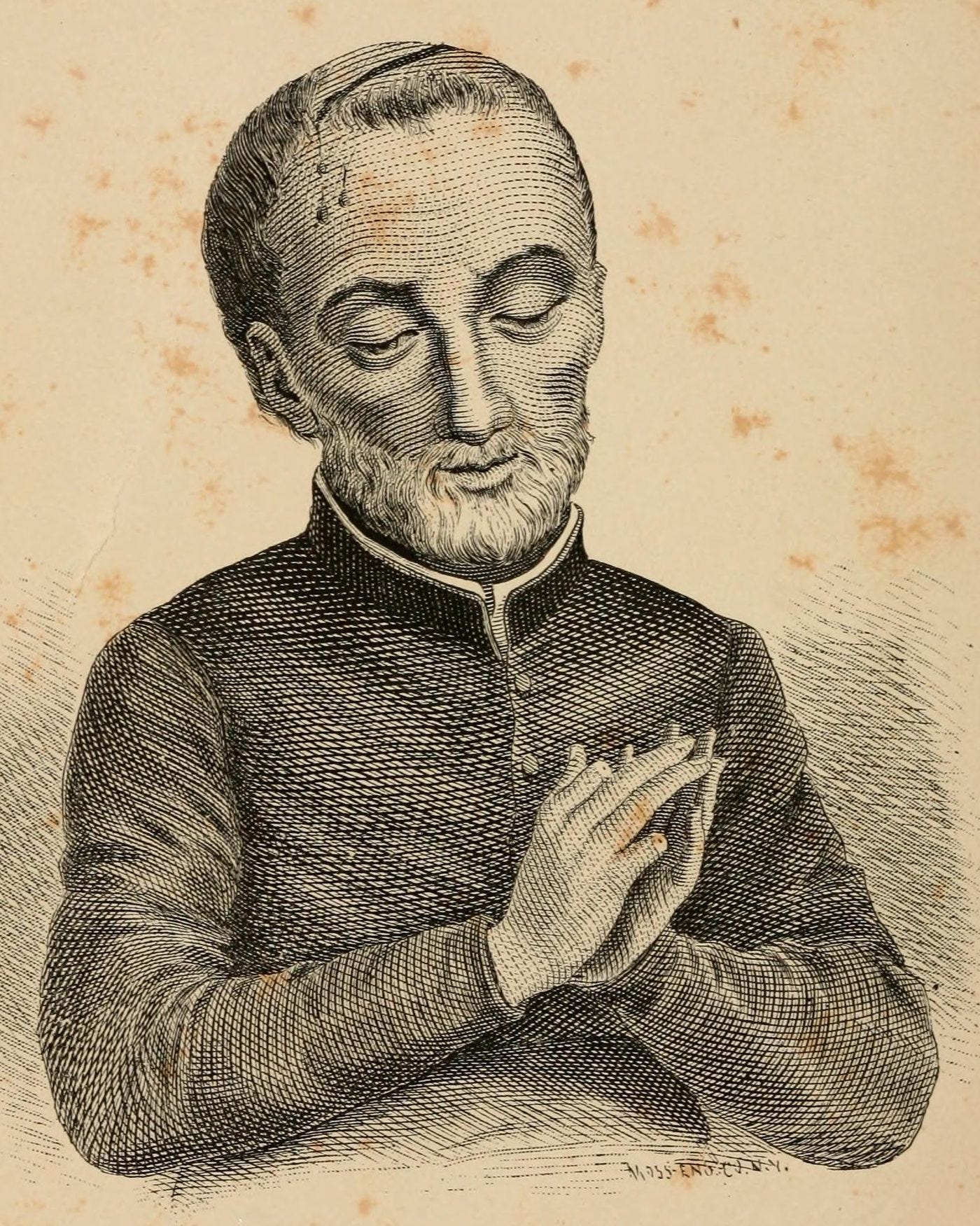
French to the heart, a patriot in the truest sense, he contrived, watched as he was, and at the risk of being burned alive if discovered, to send to Montmagny, the Governor of Canada, valuable information as to the numbers and designs of the Iroquois. His place of captivity being near Fort Orange on the Hudson, he owed his final escape to the good offices of the Dutch who, having learned of a design on the part of his captors to burn him alive, in revenge for the ill-success of an attack on Fort Richelieu, finally persuaded him to avail himself of the proffered means of escape. He embarked at New Amsterdam a month later, and landed on the coast of Brittany on Christmas day, 1643.
Father Bressani, dispatched at the end of April, 1644, by his superior, Father Vimont, to carry letters and packages to the Huron missionaries, who had received nothing for three years, was the next to fall into the hands of the Iroquois, in an ambuscade near Fort Richelieu, and to undergo, for four months, a martyrdom very similar to that of Father Jogues. He also was finally set free by the Dutch, and landed at La Rochelle in November, 1644. Both he and Father Jogues returned, of deliberate choice, to the scene of their labors and sufferings, after a brief stay in Europe, Father Jogues in 1644, Father Bressani in 1645, both having obtained from the Pope permission to say Mass in spite of the mutilations they had been subjected to.
In July, 1645, a peace was concluded with a part of the Iroquois confederacy, from which the most favorable consequences were expected. It was solemnly confirmed on the 20th of September, the only doubts remaining being, first, as to the sincerity of the Mohawks, and secondly, as to how far they spoke for the whole confederacy, known as the Five Nations, or only for themselves. It was decided to send an embassy to the Iroquois, and for this task Father de Jogues was chosen. He had a feeling that he would never return. “He wrote,” says Father de Rochemonteix, “to a Jesuit, in France the confidant of the secrets of his soul: ‘Mon cœur me dit que si j’ai le bien d’être employé dans cette mission, ibo et non redibo, j’irai et je ne reviendrai pas; mais je serais heureux si Notre-Seigneur voulait achever le sacrifice là où Il l’a commencé.’ [‘My heart tells me that if I have the happiness of being employed in this mission, ibo et non redibo, I shall go and shall not return; but I would be happy if Our Lord willed to complete the sacrifice where He began it.’] . . . These heavy presentiments,” continues Father de Rochemonteix, “were not to be long in being realized.” His mission, at first apparently successful, was turned to failure by a sudden change of temper on the part of the treacherous Mohawks. After being cruelly tortured, he was put to death on the 18th of October, 1646, at the village of Ossernenon.
This murder was the signal for the renewal of hostilities, marked by all the cruelties and massacres of Indian warfare. Even the check sustained by the Iroquois at Three Rivers did not restore courage to the more peaceable tribes living to the north of the St. Lawrence. They no longer dared to come down to Quebec to sell their furs and to be instructed. But the hearts of the missionaries did not fail them. “Je ne vois icy personne baisser la tête,” writes the Superior of Quebec, under date of October 20, 1647, “on demande de monter aux Hurons, et quelques uns protestant que les feux des Iroquois sont l’un de leurs motifs pour entreprendre un voyage si dangereux.” [“I see no one here hang his head; they ask to go up to the Hurons, and some protest that the fires of the Iroquois are one of their motives for undertaking so dangerous a journey.”] They were called Joseph Bressani, Adrian Duran, Gabriel Lalemant, James Bonin and Adrian Grelon, all priests, Nicholas Noirclair, lay brother. They were accompanied by some twenty-five or thirty Frenchmen, and were destined to be present at the last hour of a dying tribe, “at the dispersion of the sad remnants of the Huron nation.”
The history of that dispersion has been written again and again. What chiefly concerns us here is the fate of the Jesuits in charge of the Huron missions. It can be briefly told: On the 4th of July, 1648, the village of St. Joseph was attacked, just after Mass, while Father Daniel and his Christian Hurons were still at prayers. Unwilling to fly himself, and wishing to give his Christians time to escape, he went out alone to meet the enemy, to certain and cruel death, “and,” writes Father de Rochemonteix, “this victim of charity died, the name of Jesus on his lips; his death saved from massacre several hundred Hurons.” Further on, he adds: “Father Daniel was the first Jesuit who received the crown of martyrdom in the Huron country.”
The first, but not the last. Father Jean de Brébeuf and Father Gabriel Lalemant were taken prisoners in March, 1649, at the village of St. Louis, and taken with their Huron fellow-captives, mostly Christians, to St. Ignace. “On the afternoon of the sixteenth,” says Parkman, “Brébeuf was led apart and tied to a stake. He seemed more concerned for his captive converts than for himself, and addressed them in a loud voice, exhorting them to suffer patiently, and promising heaven as a reward. The Iroquois, incensed, scorched him from head to foot. . . . As he continued to speak . . . they cut away his lower lip, and thrust a red-hot iron down his throat,” “and put burning coals in his mouth,” adds the account given by Father Rochemonteix. The same writer continues: “At the instigation of a renegade Huron, and in hatred of baptism, they pour boiling water three times over his head and shoulders. . . . ‘We baptize you,’ they say, ‘that you may be happy in heaven.’” Parkman says: “After a succession of other revolting tortures, they scalped him; when, seeing him nearly dead, they laid open his breast, and came in a crowd to drink the blood of so brave an enemy. . . .”
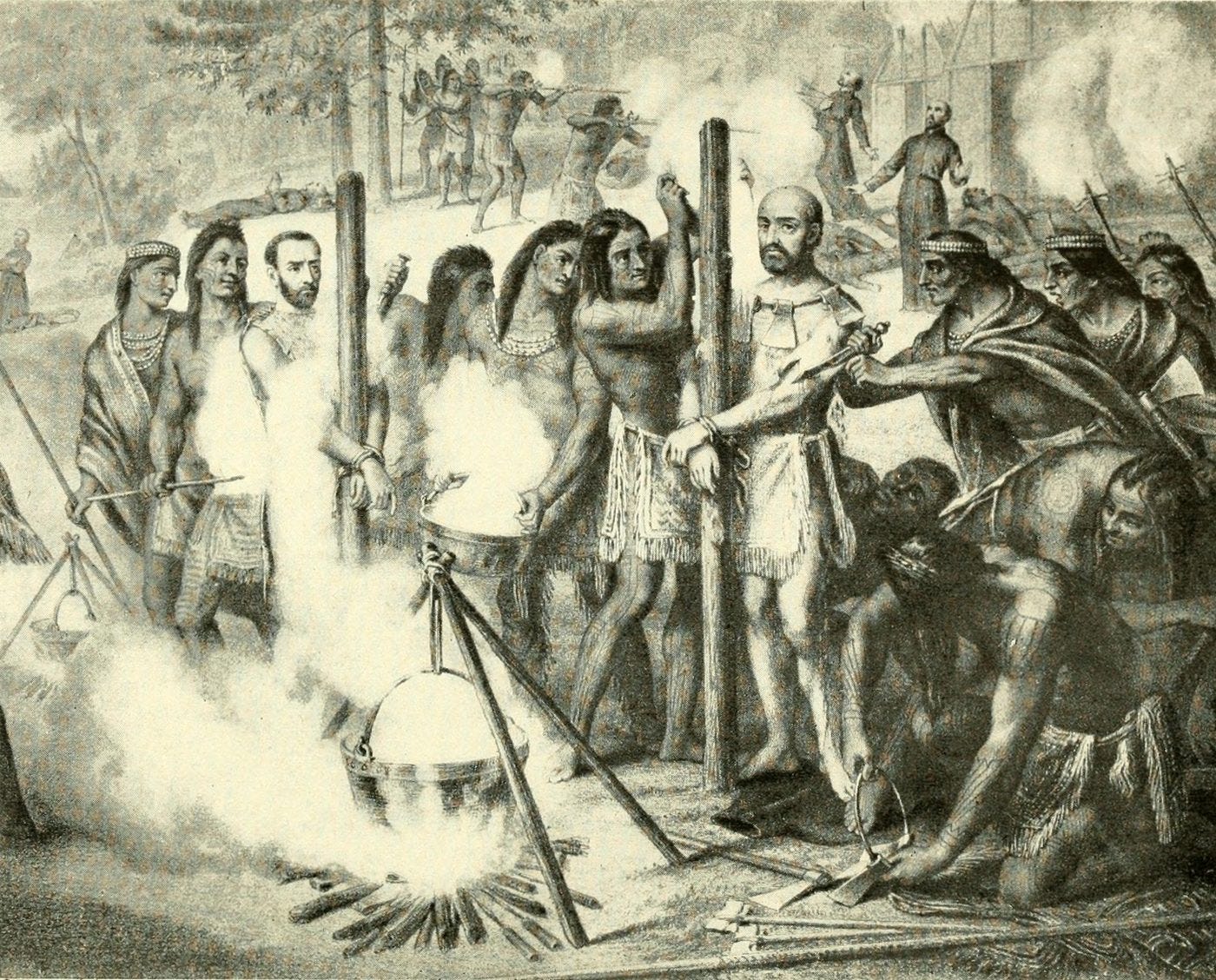
“He desired nothing so much,” writes Father de Rochemonteix, “as to shed his blood for Jesus Christ,” and adds, that among his memoirs no expression is so frequent as that of his desire so to die, “Sentio me vehementer impelli ad moriendum pro Christo.” [“I feel myself powerfully impelled to die for Christ.”] Who could wish to criticize the motives or the actions of a man who died like this?
“His companion in martyrdom,” the Jesuit historian continues, “Father Gabriel Lalemant, had neither the same physical vigor nor the same moral force. . . . The martyrdom of Father de Brébeuf lasted three hours, his, a part of a day and a night. . . . It had begun, according to some, with that of Father de Brébeuf, according to others, at six in the evening; it lasted all night, till nine in the morning, and nothing was spared him of all that the most ingenious ferocity could invent.”
The fugitive Hurons who had escaped from St. Ignace and from St. Louis, took refuge, first at Ste. Marie, where they arrived “by hundreds, without chiefs, without organization, disunited, demoralized, paralyzed with fear, broken with sickness, dying of misery and hunger.” Some, however, took refuge on the Island of St. Joseph, as offering, apparently, a more secure refuge from the fury and the pursuit of the Iroquois. The inhabitants of the villages of St. Michael and of St. John the Baptist appealed to the clemency of the victors, and were enrolled among one of the tribes of the confederacy, thus becoming “the first nucleus of Christianity among the Iroquois.”
Ste. Marie having become exposed to attack by the destruction of the other Huron villages, the missionaries decided to abandon it, and to accept the invitation of the Huron refugees on St. Joseph’s Island. On the 14th of June, 1649, they left Ste. Marie for St. Joseph, where they built a fort, and gathered about them large numbers of refugee Hurons, hoping that here, at least, they would be safe. The destruction, however, of the two missions among the Tobacco nation, and the martyrdom of two priests, Father Garnier and Father Chabanel, the news of which was received at St. Joseph at the end of December, 1649, seemed to render even this position untenable. A famine broke out during the winter, followed by an outbreak of disease. A party sent out as soon as the ice began to break up, in search of food, fell into the hands of the Iroquois, who had landed in large numbers on the island itself. It only remained to abandon the new fort of Ste. Marie, and this course was decided upon by the council of the Hurons at the beginning of spring, and, on the 10th of June, 1650, “the missionaries, their attendants, and three hundred Christian Hurons, embarked in silence,” intending to take refuge at Quebec, where they arrived on the 28th of July.
The remainder of their sad history may be briefly told. “The arrival of these savages,” writes Father Rochemonteix, “was a heavy burden on the French colony.” Supported during the next few months by the charity of the Jesuits and of the Ursuline Nuns, in ever-increasing numbers, they were settled in March, 1651, on the property of the Jesuits on the island of Orleans, in a village called, once more, Ste. Marie. Driven even from here by fear of the Iroquois, they divided into several parties, some of whom made peace with the enemy, the few remaining families finally settling, first at Old Lorette, in 1668, and then at New Lorette, at the beginning of the eighteenth century.