


From the Editor
Francis died at the Porziuncula on the evening of October 3, 1226, eight hundred years ago tonight. He had asked to be laid on the bare ground, and he had lately added to his Canticle a verse welcoming Sister Death. By the reckoning of the time, which began the day at sunset, he died on October 4; that is why his feast falls tomorrow, and why Franciscans keep this evening, rather, as the Transitus, his “passing over.”
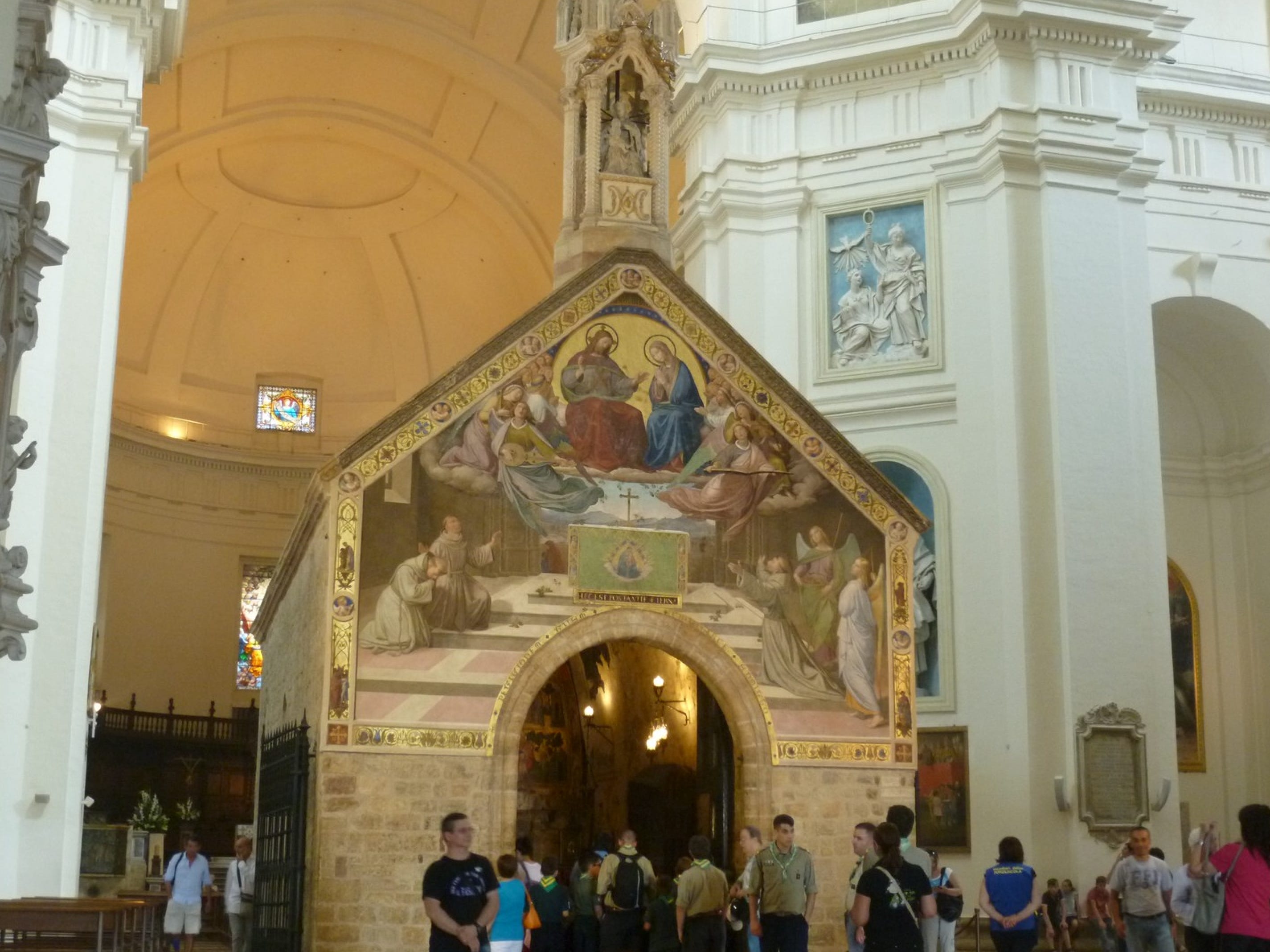
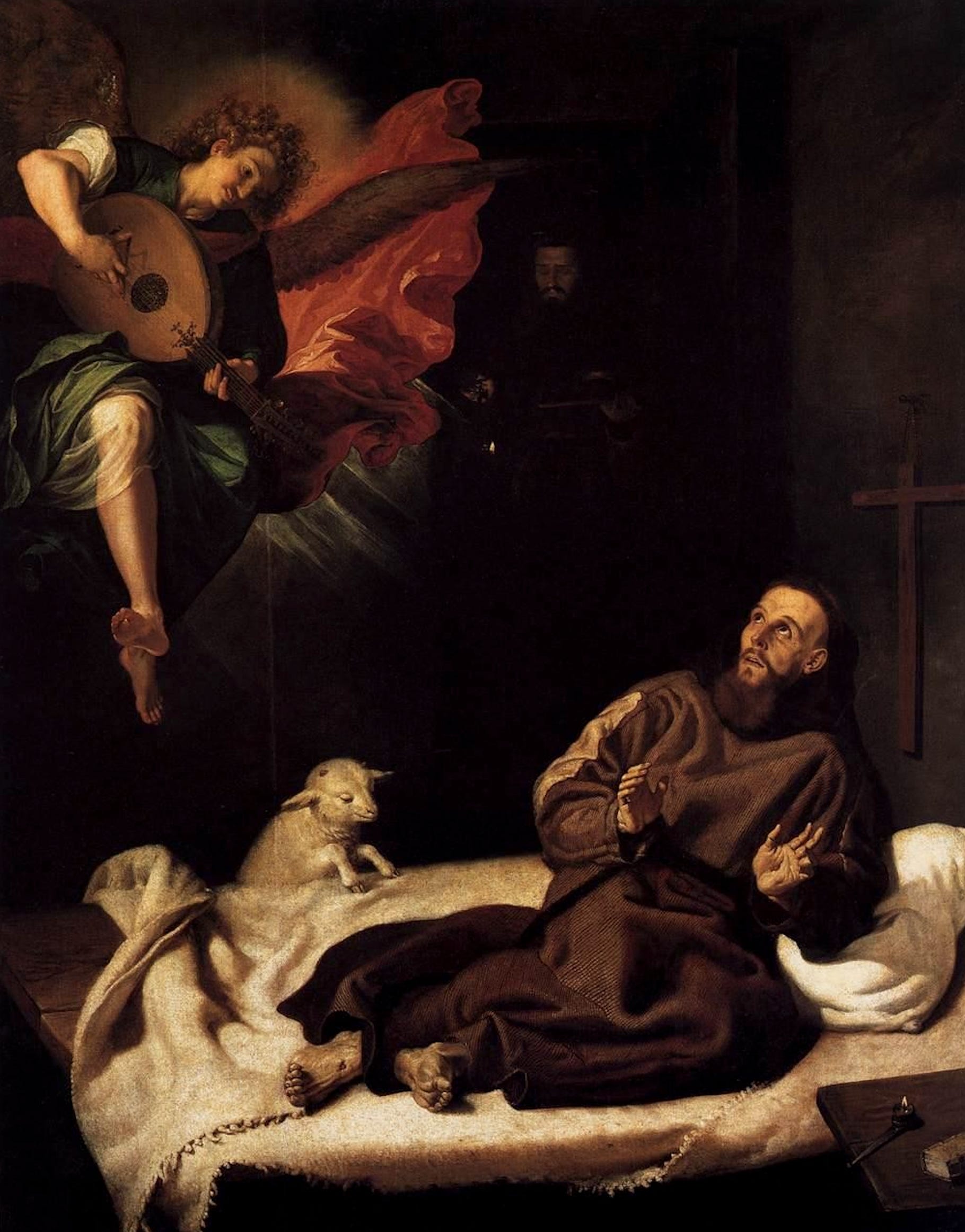
Simply, we mark the hour with the closing pages of a popular life of the saint, which E. Leahy wrote for this Review in July 1923. Leahy was not a critical historian. He took the old stories as they were passed down. But the stories are indeed old. The music at Rieti comes from Thomas of Celano, who wrote within a generation of the saint’s death; the larks over the roof come from St. Bonaventure. The “violin” is Leahy’s own touch: Celano’s word is cithara, a lute or zither, which is what the angel holds in Francisco Ribalta’s painting below.
The pages begin, fittingly, with the sun, and they end with sunset—just as the hymns of the Divine Office greet the dawn and the dusk.
Leahy’s writing is beautiful and a witness to the kind of Catholic reflection we wish to revive.
Michael Pakaluk
The Transitus of St. Francis
From “The Little ‘Poor Man’ of Assisi” (1923)
But of all created things Francis loved best the sun, and next to it fire.
“In the morning,” he would say, “when the sun rises all men ought to praise God Who created it for our use, for all things are made visible by it. But in the evening, when it is night, all men ought to praise God for brother fire, which gives our light at night. For we are like the blind, but God gives light by means of these two brothers.”
. . .
We have already spoken of the saint’s love for the woodland hermitage of Porziuncola, a love which grew and deepened as the years went by. It may be said with truth that the only spot on earth that Francis ever allowed himself to regard as home was Porziuncola. Thus it is that in the autumn of 1226 we find him returning to the loved retreat, a weary, worn-out man; broken with austerities, physical sufferings, many sorrows and much disappointment. Francis had come home to die.
It is related that a short time previously, whilst sojourning at Rieti, the saint, being in greater pain than usual, requested one of the brothers to play and sing to him some sacred song which might soothe his suffering. The Brother demurred, alleging as an excuse that the people of the house would be disedified if they heard the sounds of a violin issuing from the sick man’s room. The meek Francis did not press the matter further. But that night, as he lay sleepless on his couch of pain, he heard in the stillness strains of unearthly sweetness outside his window. Well the saint knew that never did earthly musician produce from instrument fashioned by mortal hands such melody. All through the hours of darkness the celestial harping continued, and when morning came Francis said to the Brother: “The Lord did not forget me this time either, but comforted me, as He always does. Instead of thee, He sent me an angel who had played for me all night.”
On the 3d of October, 1226, the Master’s call came. As the day waned Francis seemed to gain strength, and lifting up his voice he sang the 141st Psalm [Psalm 142 in the Hebrew numbering], beginning, “I cried to the Lord with my voice.” And then as the golden light of sunset was illumining the Apennines, there fell a sudden stillness round the couch of Francis, that stillness which is like no other, and the weeping Brothers knew that their father had left them.
God’s peerless knight, God’s sweet singer, had gone home. After the first few moments of silence there came a burst of harmony sweet and loud. The saint’s “sister larks” were filling the air with hymns of praise.
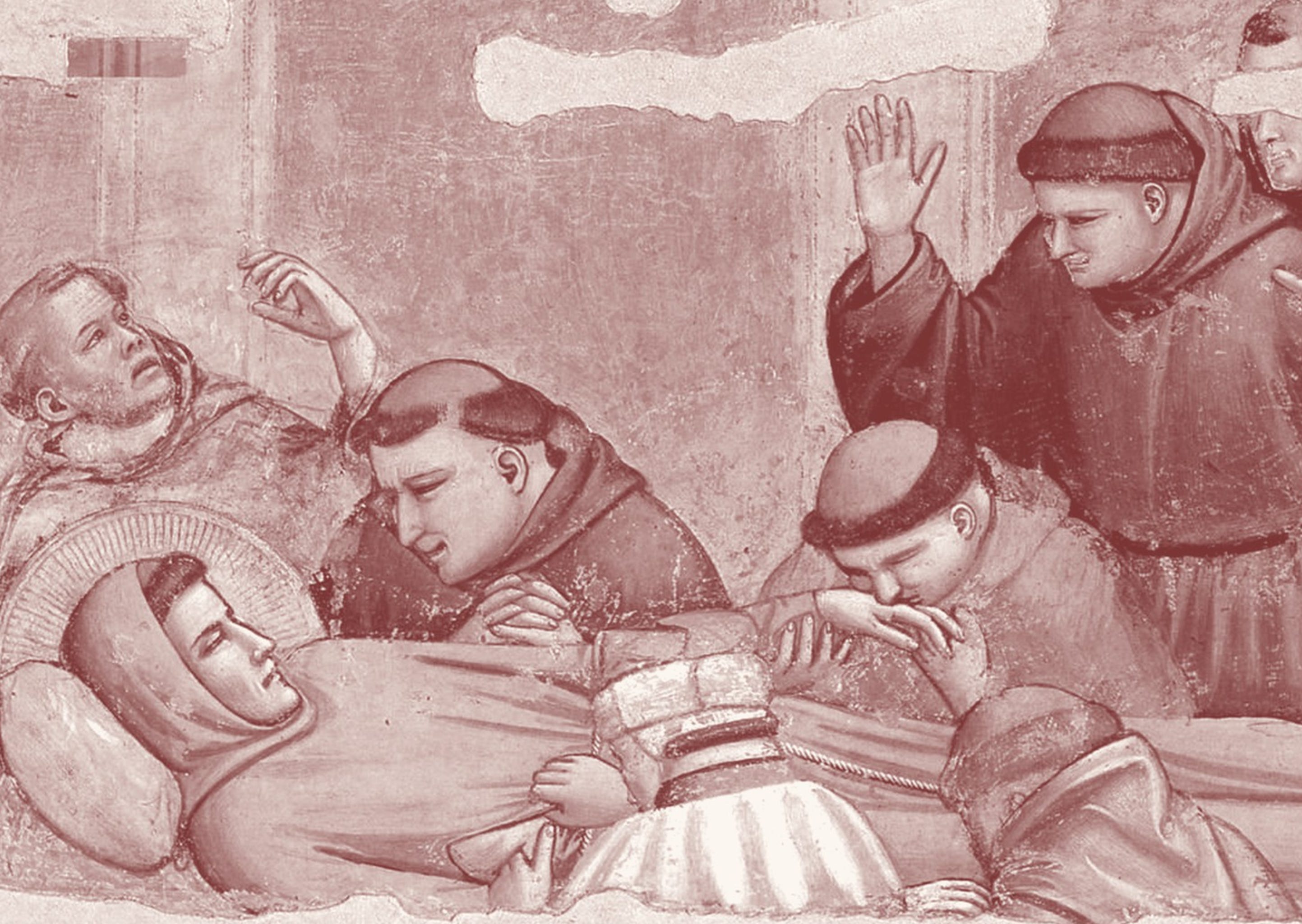
From The American Catholic Quarterly Review 48 (July 1923): 185–208. The text is reprinted as it first appeared, with evident misprints corrected; words in square brackets are the editor’s. Cover: Giotto, The Death of St. Francis (detail), c. 1325, Bardi Chapel, Santa Croce, Florence; Wikimedia Commons.