


By the Right Rev. Thomas A. Becker
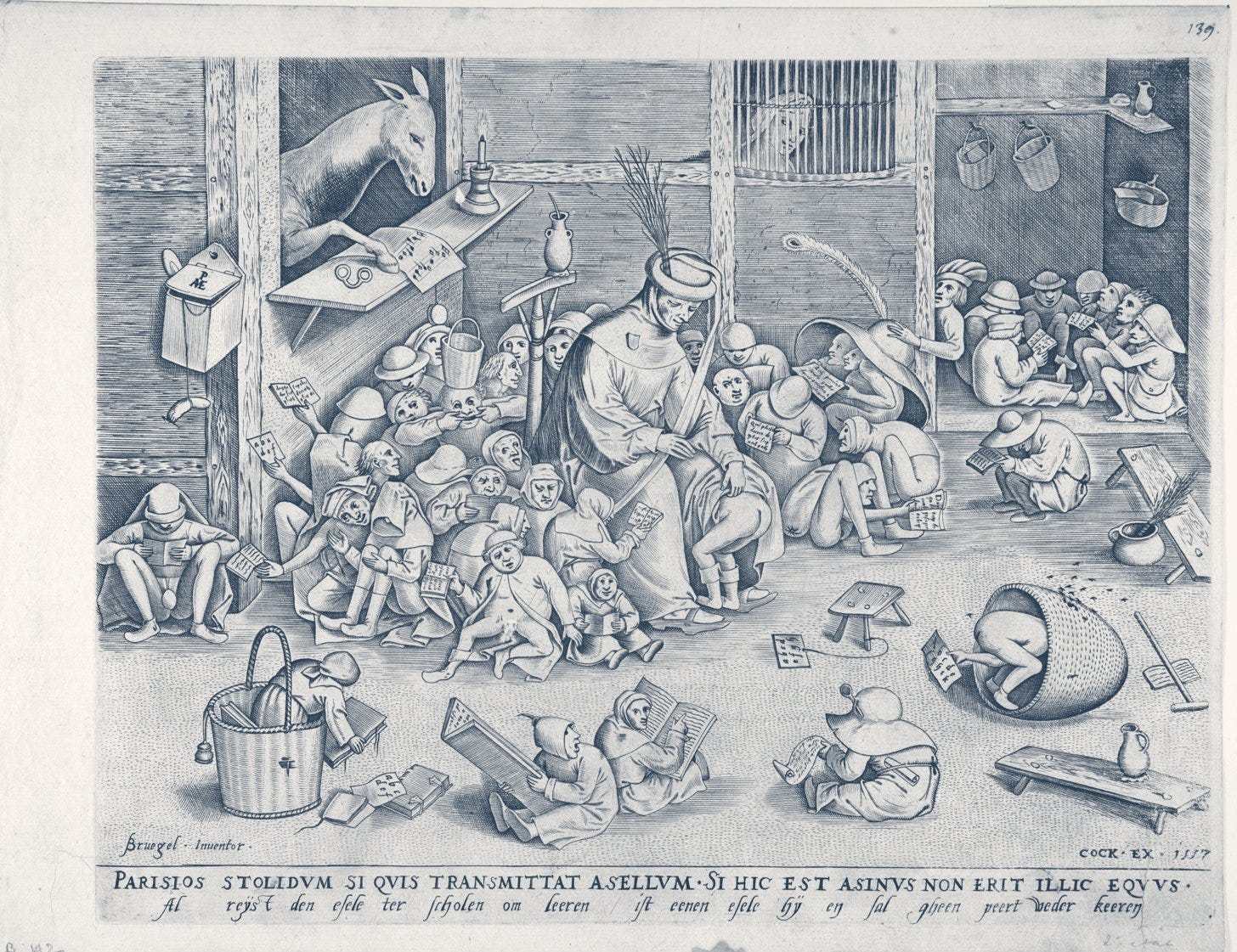
From the Editor. Yesterday we ran the first part of “The Classical Education of the Day,” by the Right Rev. Thomas A. Becker, from our first number (January 1876). Becker placed the weakness of American classical learning at the door of the academies that prepare boys for college: founded for sect or for profit, staffed by whoever comes cheapest, and sending up their pupils to colleges that turn no one away.
Today he follows those boys into the college classroom, where a conscientious professor faces a freshman class mostly unready for him. He also turns on the publishers of easy-method textbooks and on students in a hurry to begin their professions.
The final part follows tomorrow.
Remember, the essay is important not least for disabusing us of the imagined ideal of “golden days” of classical education. We can do better here and now.
THE CLASSICAL EDUCATION OF THE DAY
Right Rev. T. A. Becker, D.D.
American Catholic Quarterly Review, vol. 1, no. 1 (January 1876), pp. 33–50 (continued)
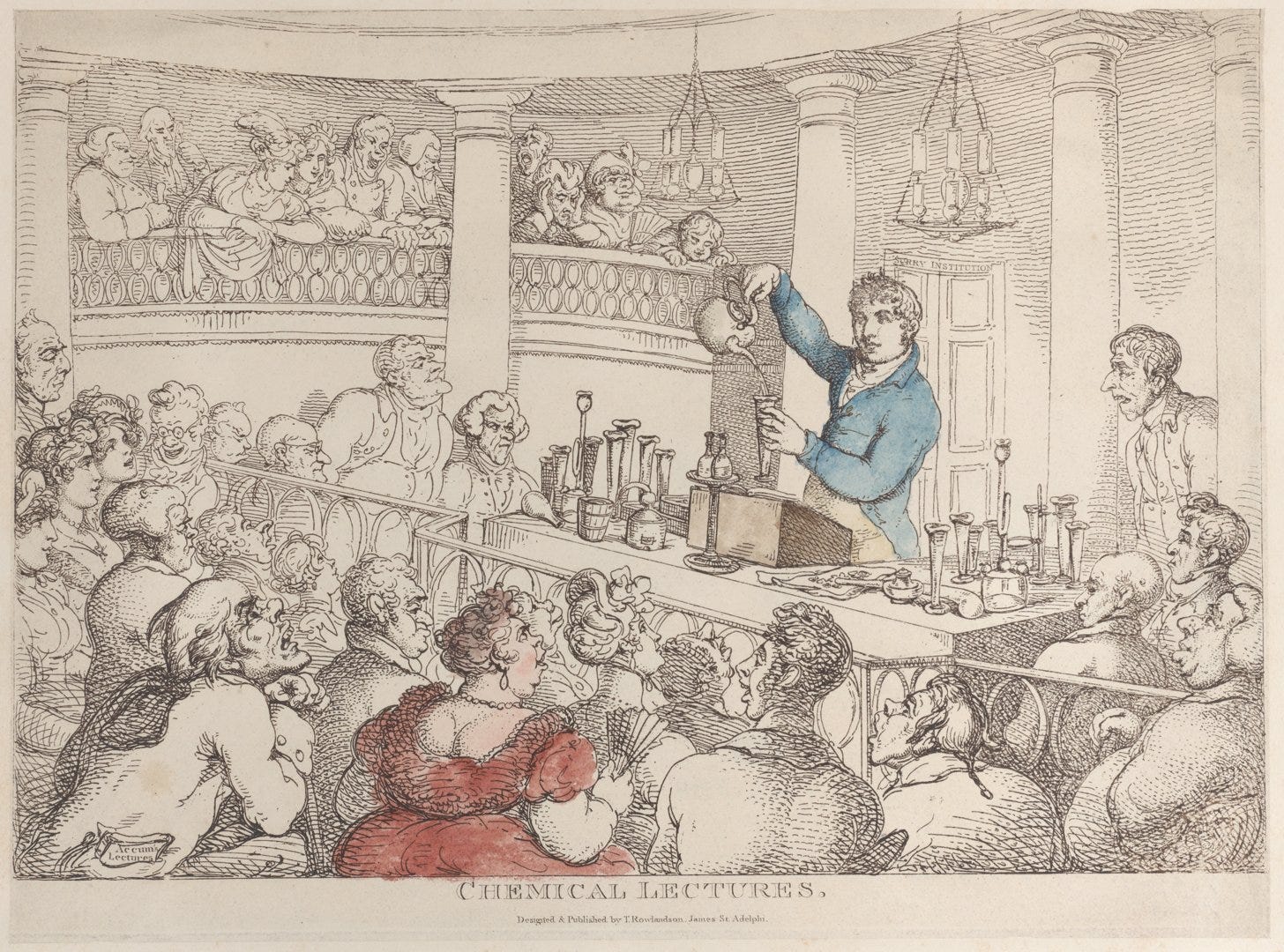
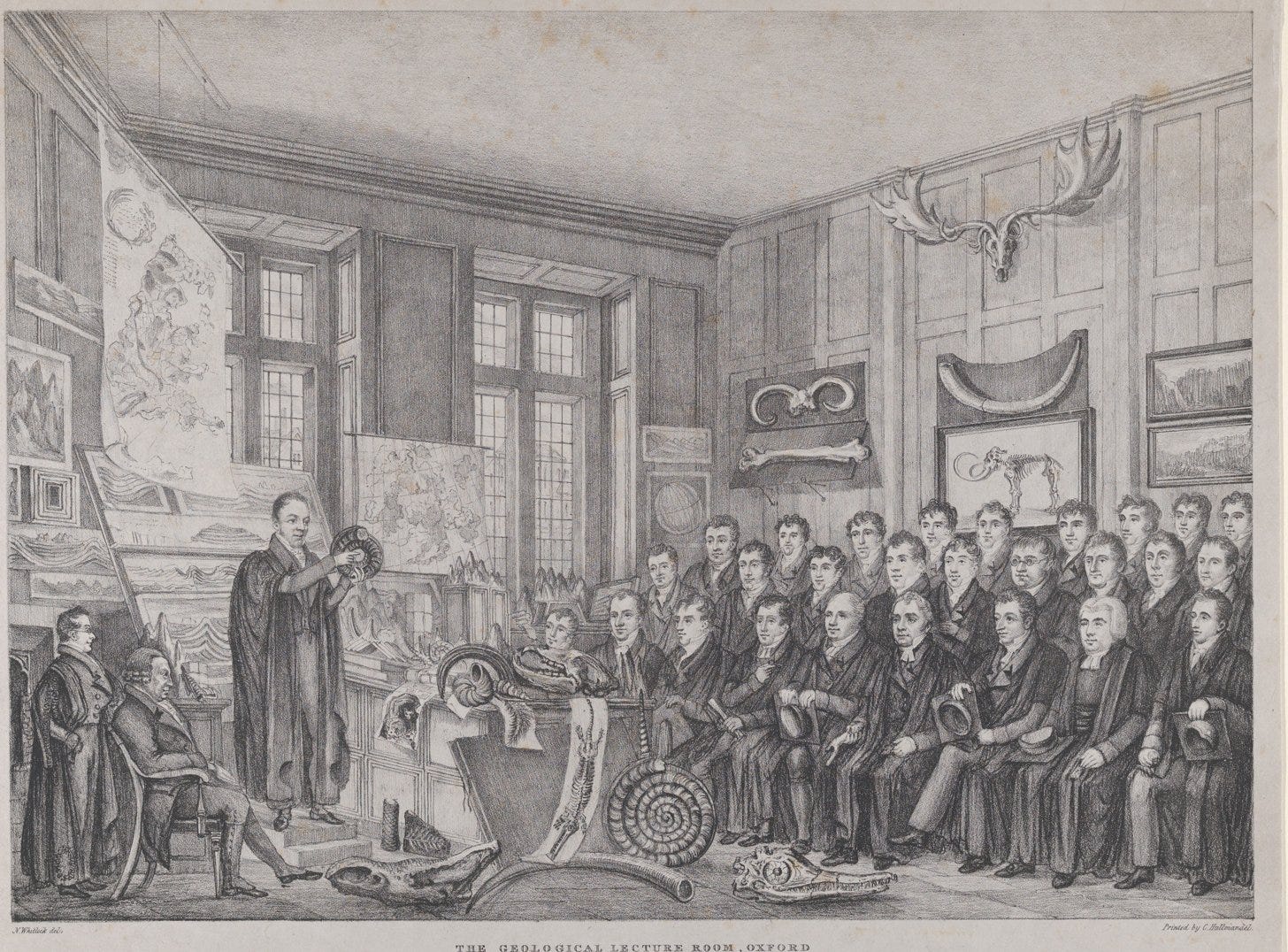
Now admit, for argument’s sake, the professor of classics in college to be conscientious, a scholar and a teacher (no two of which characteristics necessarily and always unite in the same person, much less all three), we ask what is he to do, what can he do, when a Freshman class of eighty or a hundred comes before him? Three-fourths of them are utterly unprepared to profit by any such instruction as should be given in college, even to the lowest class. One-eighth are inefficiently prepared, and we will say for the sake of argument, that the remaining one-eighth are fairly ready for the proper class instruction. If he directs his instruction to the second class, he shoots, during the greater part of the year, over the heads of the first, and repeats a thrice-told tale to the third section, who become careless and weary, mentally asking themselves why they came here, and whether this be the so much vaunted, and by them dreaded college, of the profundity of instruction at which they had in previous years heard so much; while some of the first section may perhaps in their new fervor strive for a week or two to follow the Professor, the majority not even attempting that; and all in a short time fall into a sort of mental apathy and carelessness, one part because of the impossibility of making up for the lost or inadequate instruction they should have acquired at the academy, and another because they knew it all before, and fancy themselves preternaturally sagacious and learned. Meantime the Professor himself is with one-eighth of the class plunging away at explications which never ought to be needed beyond a fair grammar-school. This is no fancy sketch, for the writer has occupied just such a position in one of the first institutions, by current repute then and now, in the country. Only, in his case, the classes were larger in numbers, and the proportion of those properly prepared fell far short of one-eighth. What can be expected from such a class when it comes up for graduation? Is it not clear where our classical inferiority originates and has its prime cause? It is not the fault of the boys themselves, for no country in the world contains brighter ones; but it is the fault of the careless, incompetent, haphazard and money-making teachers who have had the charge of their previous education. The boy who is allowed to come up to college without a clear idea of the distinction between an adverb and an adjective in any language, is exceedingly likely to go through college, and to graduate, without acquiring it. We have personally known both things to occur, and the person referred to now prepares young men for college himself; at least he is Principal of an academy.
It may well be said in the matter of education that everything depends on a good beginning; and in college there neither is nor should be any chance of making up for the years lost at an academy. Nor is it, as unfortunately too many people are apt to imagine, a matter of comparative indifference who teaches our sons at the academy, or whether their grade of acquirement and mental calibre be high or not; since unless the instruction at that stage in education be thorough, there is very little hope that the loss will ever be made good. Were the subject not so serious, and the results so momentous, those announcements would be simply ludicrous which gravely inform us that “M—— will teach Arithmetic, Algebra, Mensuration and the elements of Latin and Greek.”The plain fact remains, and scholars know it, that he who knows only the elements of Latin and Greek does not know even those elements. Of course there are some self-made men, and our fellow citizens are very fond of the phrase; but they are fewer than is generally supposed; and the vast majority of those who have succeeded in acquiring a ripe education will acknowledge that all their efforts were but a groping in the dark, till they found a teacher who fully understood his subject, knew how to explain and make it interesting, was competent to answer clearly and intelligibly any questions upon it that the boy, always very ready that way, might put on it, and thus opened up to the juvenile mind a new, an interesting and a hitherto undiscovered world. Such a teacher has, however, most palpably been wanting to the majority of young men who enter our colleges in these days, and for some time past. Here then is the great cause of our lack, laughed at by observant foreigners, palpable to any one who examines the subject, and acknowledged with mortification by the most discerning among ourselves. Of course it would be requiring too much of human nature to expect academical principals and teachers, or indeed college professors en masse, to join us in the admission of the defect, or in the assignment of the prime cause which we have made. The cry that “by this craft we have our livelihood” is as potent now as in the days of the coppersmith of Ephesus.
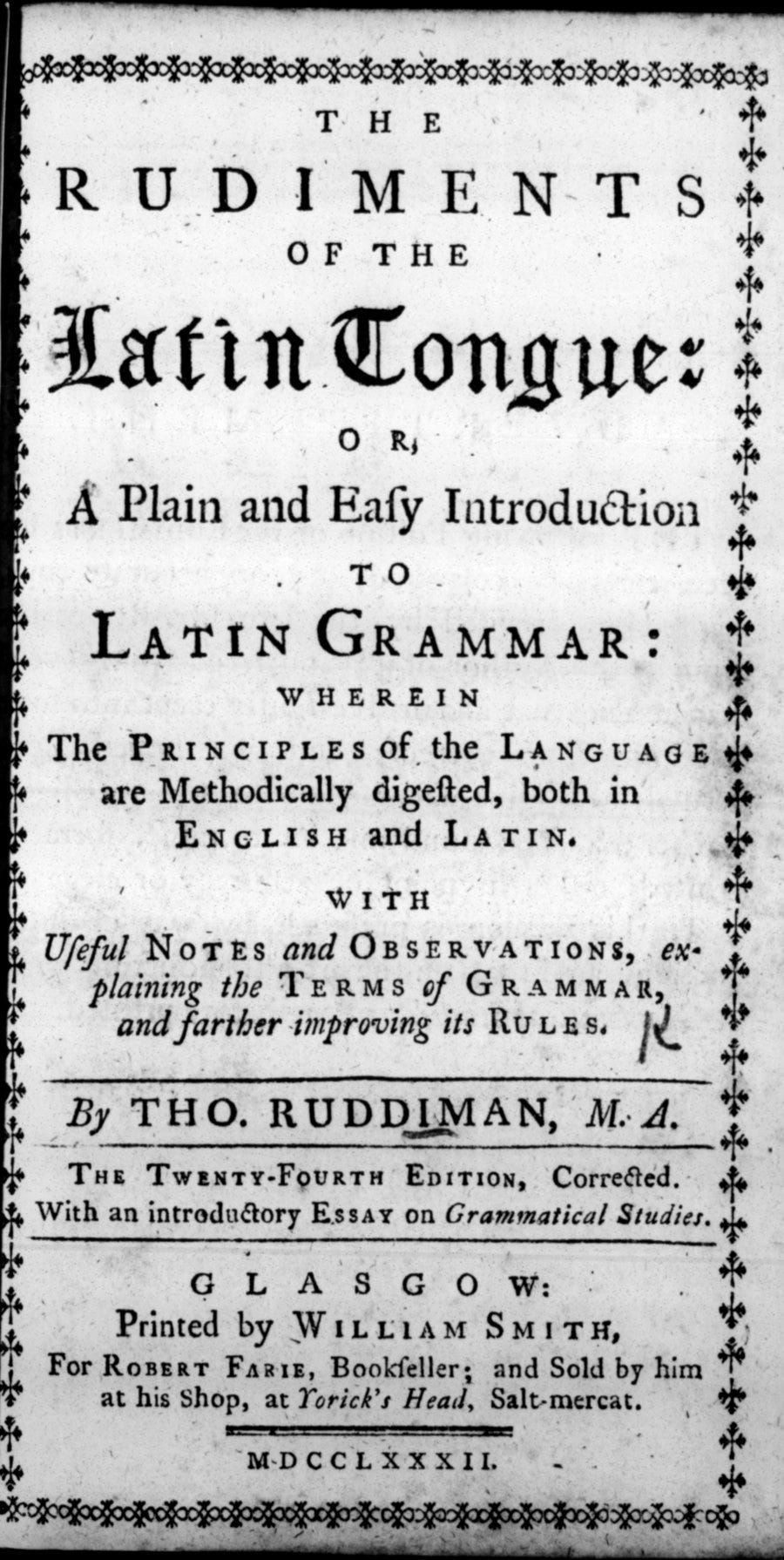
Thanks, too, to the ardor of the booksellers and book-makers for money-making, the text-books are multiplied without rhyme or reason; and few men have taught a brace of years without feeling called on to write a book on the specific subject of their instruction. Booksellers are always ready to publish such books for a man at the head of a well-frequented academy, book agents to laud it to the skies, school boards properly manipulated to introduce it by vote to the schools they control. It would be hard if the prominent pastor of the town or village adjacent did not recommend it. We say nothing of the results of this fecundity in books in other branches (parents and others patronizing schools know something at least of the pecuniary tax, and of the “different edition” annoyance:) but we charge it with being an important though a secondary cause of the decay and desuetude of classical learning amongst us; and this is how it happens: Latin and Greek are from their nature and from their literatures fixed and changeless. There is and should be no possibility of original views on the grammar of those languages; and, as a matter of fact, the Port Royal, Eton, Wettenhall, Ruddiman and Busby grammars contain all that it is desirable, nay even possible for the boy to learn at this stage of his course, and that too gotten up in a form far more intelligible, far more easily memorized, less mixed with extraneous and, to the boy, incomprehensible disquisitions, than any, singly or all together, of the new-fangled grammars, schemes, methods, phrase-books and easy plans gotten up in either Latin or Greek since the beginning of the century. In point of fact it would seem as though the decadence of classical knowledge went pari passu with the multiplication of text-books on the subject. You must teach the language to boys as it is, before you begin to philosophize and theorize to them about what it probably was in remote ages, or what it might be in future ones. It is worse than folly to attempt to explain the theory of nominal or verbal roots to a boy who does not yet know the five declensions, nor the four regular conjugations, or the scheme of the Indo-European languages to the lad who does not yet comprehend the agreement of a verb with its nominative in his own; and so, by attempting too much, as well as by the improper and piecemeal presentation of what is necessary, you succeed in nothing but in imparting to the pupil a rooted disgust for the study, and a full conviction, enduring through life, that it is one of those things “that no fellow can find out.” Yet this is what a great majority of our superabundant text-books try to do; and the remainder do worse by attempting to minimize, giving, for example, the nominative and objective of a single declension at one lesson; fag ends of pronouns and the verb “esse” at a second; a couple of persons in a tense or two of “amo,” at a third; and so on to the bitter end of such book; but at no time presenting the whole of a single subject compactly and squarely together, so that the pupil may have a full survey and a fair intelligence of it. Why even the old grammar of Ross, published early in this century in a neighboring city, curt, lacking, and unphilosophical though it was, contained more that was necessary, less that was extraneous, and made more and abler scholars in Latin than would stacks of these miserable, windy, pretentious and insincere make-shifts, were they multiplied to millions in numbers and by myriads in effective influence. Another cause largely contributing to the decay of classical learning among us, is the strong tendency of our American people towards cheap, patent and easy roads to learning of all kinds, but in no branch of science are the results so baleful as in the study or want of study of Latin and Greek. In acquiring these tongues so much must of necessity depend on mere memory in the first stages, so much must be absolutely gotten by rote, that our ancestors very properly put a simple Latin grammar into the boy’s hands who was destined or intended even from the age of seven years to become a literary man; rightly judging that the faculty of memory was cultivable in the boy, long before there was any possibility of appealing to the judgment. There followed then an age of weak teaching, the Lancasterian, the Pestalozzian, the Hamiltonian as applied to primary and secondary schools, the Ollendorffian, and other, if possible, more absurd and ludicrous modes, culminating in the various modern languages “in six easy lessons without a master,” applied to the acquisition of European languages, but from which neither boy nor man ever yet acquired a cent’s worth of knowledge, further than the general fact that the system was a cheat. Some of these have had their day, and been exploded; others still have vogue; and yet others under one name or another are tickling the fancies of those who are eager for anything new, merely on account of its novelty. In classics we see books intended to compress the whole subject of Latin and Greek, or either grammar into a nutshell; others that profess to do away with all necessity for the study thereof; and yet other more specious frauds that, if they have any aim other than that of making money for their compilers and the booksellers, tend to produce the impression that grammatical forms, rules and paradigms, are to be acquired with no trouble. We have been and are politically a ring-ruled people (we beg pardon for the use of a slang term, but Americans understand it best); and the ring dynasty has taken hold of, and is controlling our text-books in school matters generally; more especially, or rather, we should say, with greater injury to the cause of education in the classics than in many other branches (though in this free country, and in the common schools, chiefly patronized by the wealthy, and in which the simply poor are derided or despised,) the books saddled on the children are almost always sectarian and lying. The authors of such books are not scholars themselves — no scholar needs to be told this; but they are shrewd oftentimes, know well the processes of manipulation, the tendency to gullibility on the part of the public, and the all-pervading ignorance of classics. I have now before me a sheet purporting to give, in the space of less than a page, the entire forms of the four regular conjugations in Latin; the author of which asserts in print that, after two hours study thereof, the student will know as much of the Latin verb as Cicero himself; and he sets forth letters of recommendation which, from the positions held by those signing them, should be of weight; but which, in such connection, only serve to show in a strong light “with how little knowledge the world is governed,” and how easily letters commendatory are gotten by any one for almost anything. There are also before me three different editions of a very superficial work on Latin grammar, all published within a few years; no two alike in paging or in sequence of subjects, but no one containing anything more than each other; it simply seeming as though the same matter had been riddled through a sieve into each, and chance had decided which should come first, which last, and which mid-way. Here the form of the matter is palpably a catch to force a purchase of the two latter editions: no teacher being able either to assign lessons, or to hear a class of boys supplied, as would frequently happen, with all these. In short, it does not matter how silly the theory, how absurd the treatment, how insane the plan, men can be readily found to compile if it promises novelty, booksellers to publish if it promises money, distinguished names to recommend it; and the public, which for the most part has no knowledge in the premises, is of course largely swayed by any names in print, more especially by those that are known.
Again, our young men are over anxious to launch themselves out in life. Those of them who wish to enter the professions soon find out that large masses of physicians and lawyers in our country know supremely little beyond set phrases of Latin and Greek; that others know, if less be possible, still less Greek; and that there is no absolute requirement, either by the law of the land or by the statutes of the most of our colleges, for their knowing any. The effect of this knowledge is obvious. Seven years will be required, even with good brains, industry, and thorough teaching and training, to acquire such knowledge of classics as would justly entitle any one to the name of a classical scholar: for in nothing else can it more truly be said that “a little learning is a dangerous thing.” Here are clearly seven years gained, and a large amount of severe and drudging study (how severe only those who have tried it can know!) avoided. Can any one doubt the conclusion at which the youth immediately arrives? He would be a paragon indeed were he not to be misled into taking the easier path and shorter cut. A vague idea still subsists in the general mind, that clergymen must know Latin and Greek. It is also thought by some, that the study of Hebrew would benefit them somewhat. They are, however, doing their utmost to prove the falsity of both assumptions; and though there is a nominal requirement of a Latin exegesis for ordination, as they persist in calling it, among the straiter sects, and of some knowledge of the Greek of the New Testament, yet those who have been behind the scenes, who are themselves scholars, and who have had an opportunity to judge individually of any considerable number of such gentlemen of the white neckcloth, are well aware that such requirements are specious shams, and that the great bulk of them know nothing, or its equivalent, very little, of classics. There are exceptions, but they are few among our countrymen. Of Hebrew as taught, we do not purpose to speak at this time. Now the student who has not as yet acquired the classic tongues, cannot possibly know the advantages derived from their acquisition; but he is apt to have a clear, if not an exaggerated notion of their difficulties, and it is not to be wondered at that, seeing so many others pass along without them in the profession at which he aims, he should come to the conclusion to follow his compeers — to practice law or medicine, etc., without Latin or Greek, thus saving, as he supposes, expense of time, labor and money: — nay, even to enter the Church, as so many have done in the capacity of ministers, and are doing, without any classical learning.
It hardly needs to be added that in addition to the reluctance to spend the necessary time, a very large number are unwilling to apply themselves to the inevitable study. In the case of those who come up entirely unprepared, and who have the best possible excuse in the manifest impossibility of their “catching up” — to use their own expressive phrase — since reflection will teach, as experience has taught us all, how dry, how wearisome, how harassing must be attendance upon classes, the necessary preliminary instruction being deficient or wanting. How absurd the attempt to explain the doctrine of the gerund and gerundive to a student who has no conception of the difference between a noun and an adjective used as a noun, is palpable to any one who knows grammar; but what the student in such case must suffer (even supposing him to make a fair endeavor, which but few will be found long to attempt) must be left to the imagination. College professors who know their duty and try to perform it, will join me in admitting the intense annoyance to themselves, the irksomeness of the work both to them and the student, and the impossibility to the latter of recovery when “sero medicina paratur” [the medicine is prepared too late]. Now the time applied to study at college is an item of no small moment; and we speak the admitted results of experience when we say that even a well-prepared student, during his first three years at our American colleges, ought to spend at least two hours daily on classics alone, to give him any fair prospect of the amount of actual knowledge that he should have on graduation. When it is borne in mind that there are other studies, also of importance, to be pursued, and that each one requires a proportionate amount of study, it will be seen that even on the part of the best students an amount of time and study is required that will absolutely preclude the wasting of time and attention on frivolities; and if this be so, what must be the case of the unprepared lad, who has yet to learn what he should have acquired at the grammar school?
It may indeed well be, and we should judge from indications the fact is, that many of our students come to college as young men used before the war to go to the University of Virginia; not intending to study there, and consequently not proposing to learn anything there, but merely on the general ground that it was the correct thing to have to say, in after life, that they had been at the University, whether they learned anything there or not.
(To be concluded.)
✠
"In acquiring these tongues so much must of necessity depend on mere memory in the first stages, so much must be absolutely gotten by rote, that our ancestors very properly put a simple Latin grammar into the boy’s hands who was destined or intended even from the age of seven years to become a literary man; rightly judging that the faculty of memory was cultivable in the boy, long before there was any possibility of appealing to the judgment."
So even to Rev. Becker, there was a "good-old-age" of classical education. It just has to be found with the Port Royal, Eton, Wettenhall, Ruddiman and Busby grammars.
Thankfully, most of these can be found by Claude through the internet archive in 5 minutes. Someone could do a great service to humanity in comparing these to Wheelock and improving the faults of either.
Port Royal grammar, Vol. 1: https://archive.org/download/newmethodoflearn01lanciala/newmethodoflearn01lanciala.pdf
Vol. 2: https://archive.org/download/newmethodoflearn02lanciala/newmethodoflearn02lanciala.pdf