


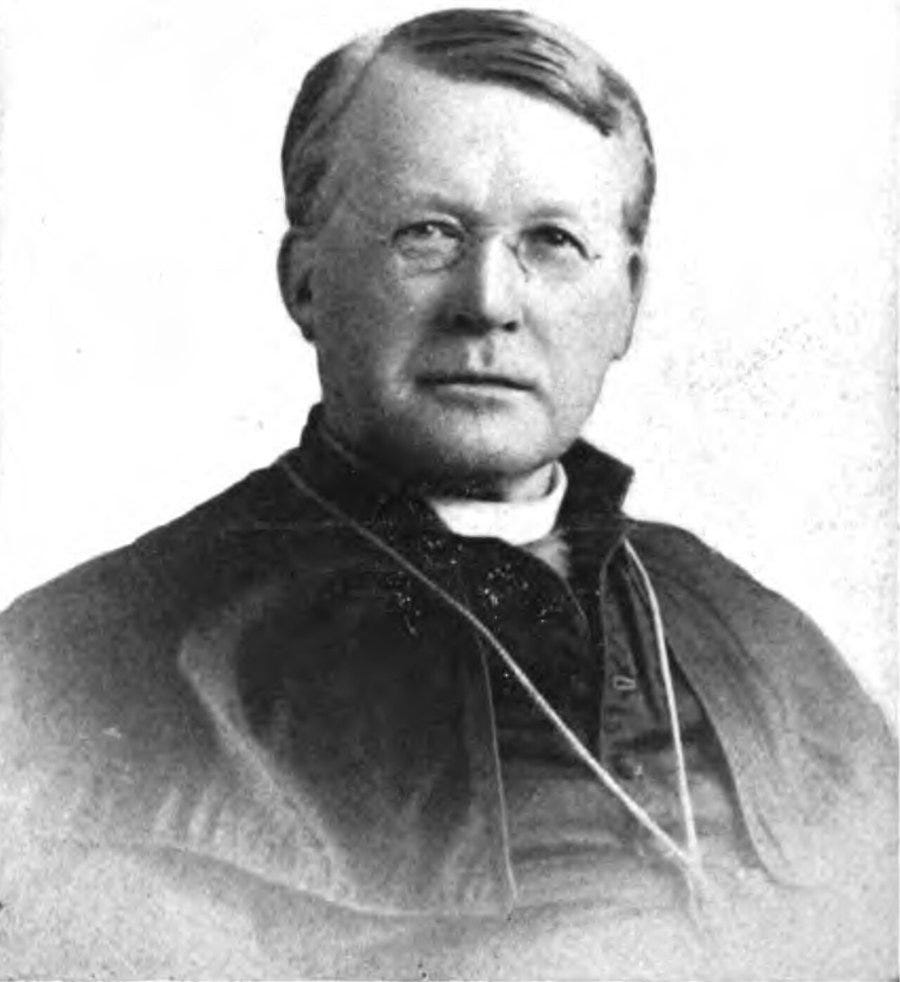
By the Right Rev. T. A. Becker, D.D.

From the Editor. Our goal at this Review is to contribute to a revival of Catholic intellectual life in this nation by bringing out things both new and old. Over the next three days we offer you something old: an assessment of the state of classical education in the United States in 1876.
You may have assumed that the story of classical education in our country is one of continuous decline. If so, when you saw the title of today’s essay and its date, you may have expected it to describe an earlier golden era, when the beauty and usefulness of a solid classical education shone forth with great clarity. Wasn’t everyone required to study Latin and Greek in those days? Didn’t virtually all colleges and universities require ability in those languages for admission? Didn’t all educated persons possess a common “cultural literacy” from their study of the classics?
But to require something is not the same as to secure it. This essay, by the Right Rev. Thomas A. Becker, then Bishop of Wilmington, proves to be a devastating criticism of the educational practices of his day. Reading it will make you grateful for the solid blessings of the classical schooling movement in our own day.
When Becker wrote, Harvard, under its new president, Charles W. Eliot, was introducing the “elective” system. Within a decade, it would abolish its required courses and drop Greek from its requirements for admission. The classics were coming under increasing attack as irrelevant. Leaders in business pressed for a “scientific” education instead. Becker intended his essay as an honest account of observable deficiencies, which could serve as a prelude to reform. Instead, it reads almost as a brief against classical education.
Nonetheless, Becker never waivers from his conviction that a classical education is best.
Becker (1832–1899) was Bishop of Wilmington from 1868, and of Savannah from 1886. He wrote twice more for the Review’s first volume, with “Shall We Have a University?” and “A Plan for the Proposed Catholic University,” a decade before the bishops founded The Catholic University of America.
A convert from Presbyterianism himself, Becker has sharp words for the Protestant “sects.” As the essay in places shows, he shared some of the regrettable prejudices of his time; we have left his vocabulary as it is.
We run the essay in three parts: today, the academies that prepare boys for college; tomorrow, the college classroom and the textbook trade; and on Friday, the colleges and their professors.
THE CLASSICAL EDUCATION OF THE DAY
Right Rev. T. A. Becker, D.D.
American Catholic Quarterly Review, vol. 1, no. 1 (January 1876), pp. 33–50
Semper ego auditor tantum, nunquamne reponam?
Juvenal [Must I always be only a listener? Shall I never reply?]
The Americans very naturally object to the admission that anything in our country and its institutions is not of the very first class and quality; nor is the feeling which prompts such dislike an unsuitable one. It is right and proper that people should admire their own country; but it is manifestly absurd that our predilection should be so indiscriminate as to close our eyes either to our own faults, or to the excellence of other countries and other people. Now, without speaking more specifically for the present, of some other points in regard to which the comparison, if fairly drawn, would not result in our favor, we propose in this paper to speak of classical education in the United States, and to compare it with the same thing in some of the countries of the old world. We are sorry to be obliged to make in advance the admission that with few and rare exceptions, which the writer rather takes for granted through patriotism than knows to exist from experience, we are lamentably and painfully behind some of the countries which the popular speakers of the day are in the habit of denominating the “effete European countries.” It will be the object of the present paper to show firstly the fact; secondly what are the causes that have conduced thereto; and finally in what manner subsidio seu remedio veniendum est [help or remedy must be brought]. And as there is a much higher use for patriotic impulse than in becoming foolishly angry with those who show us our faults, it is to be hoped that the strictures necessarily made, and which from their truth will cut in many quarters deeply, will be received in the firm, but kindly spirit in which the writer (himself an American) fain hopes that he is laying these before the community.
It must be very evident to those whose fortune it was to be conversant as teachers or taught, or as mere “lookers on in Venice,” with the colleges of our country some twenty or twenty-five years ago, that while the grade of knowledge in Latin and Greek then and there acquired compared by no means favorably, either as to extent or depth, with that of European institutions of much less pretension, yet even that minimum of acquirements has been year by year decreasing both in amount and in thoroughness. For this we appeal to the actual consciousness and inner conviction of those who either as examiners, trustees, or merely educated citizens of public spirit, have kept themselves conversant with the run of the various colleges of their own or of other denominations in their respective vicinities. In short, we all know that the graduate of nowadays, from some of the “best” institutions, knows so little of Latin and Greek, that even his own gross ignorance thereof, though backed by the presumption engendered by the possession of a diploma, would shame to attempt, we will not say making himself orally intelligible in tolerably correct Latinity, but even to write a Latin letter with any assurance of correctness. [1]
It would be useless, as it is uncalled for, here to enter into a dissertation on the importance of these studies, of their absolute necessity in any system of education destined to reach beyond the merest elements, of the utter inadequacy of any substitutes ever yet devised in their stead, and of the further fact that without a fair and full knowledge of classics, we grope in the dark as professional men, at least, for knowledge of our own vernacular. We write for those who know classics, and who need no arguments on this subject. ….
Now, how many of our graduates are there from the various colleges, who when taken out of the few and perfunctorily learned books of Nepos, Cæsar, Cicero, Virgil and Horace, read and understand with even tolerable facility a half page of hitherto unseen Latin? How many who will succeed at anything like a rigid scrutiny of concord, accord and government, even in the books of the ordinary curriculum? How many who will read a few lines of Ovid or Virgil so that the ear will distinguish them from prose? How many who could be said by any stretch of charitable language to have become imbued with the spirit of the classics, failing which the whole value of the study, even as a mental discipline, either very seriously diminishes or goes by the board? Those who know, answer at once that they are “rari nantes” [a few swimming here and there], and we address ourselves only to those who know whereof they speak. In all the arts and sciences, we Americans stand fully abreast of all other countries, or at least we think so: in mechanics far enough ahead of them all. Now, why should we be so far behindhand in this, one of the most important; and on our own catalogical showing the most prominent of the branches of study pursued in our colleges?
How many who could be said by any stretch of charitable language to have become imbued with the spirit of the classics, failing which the whole value of the study, even as a mental discipline, either very seriously diminishes or goes by the board?
The multiplication of colleges in the interest, real or supposed, of the numerous and jarring sects has sown the country broadcast with a weedy crop of little unfledged institutions, without means sufficient to enable them to attain even the grade of respectable grammar and high schools; and unfortunately not representing sufficient ability “to preserve them from putrefaction.” The members of the sects, at bottom hostile, whatever may be the surface pretence, are under an impression, somehow sedulously fostered by their ministers, that their sons cannot be properly taught the alphabet, or the multiplication table, much less the five declensions, or the verbs in μι save by somebody of their own special “Scheme of Salvation” as they ludicrously enough are apt to term it. As to patronizing a Catholic College, where efforts are made to give a good education, they would refuse it with horror. There exists now in a few localities of the United States a small and obscure sect called “Seceders,” a relic of the theological bickerings of two centuries ago, or less, in Scotland, but an anachronism in the present day, and in this country. Yet a man of this persuasion, in all other discernible respects a sensible person, took away his sons from a good, or at any rate, a fair school, as things go, near his own home, almost at his door, and sent them to an adjoining state, to a newly established boarding-school, merely because the founder of the new school preached seceding doctrines, and opened and closed the school with seceding prayers. He was, moreover, a man to whom, on account of his limited means, the difference between keeping his boys at home on the farm and boarding them abroad was by no means an inconsiderable item. There are many thousands of just such men, conscientious and honest, but narrow-minded. Here we do not think of including Catholics, who are bound by the teaching of the Church, which never was nor could be a sect, and which speaks authoritatively on this point, and “not like the Scribes.” We speak of the sects around us, and assert that they are very liable to patronize inefficient teachers, especially in their academies and various boarding-schools, and are absolutely sure to have narrow-minded ones, who just as frequently fail in their aim of inculcating certain dogmas and practices, since we know by experience of long standing amongst them, no better way to disgust a boy with such unsubstantial assertions, than to have them thrust upon him in season and out of season, as they are usually in such small institutes. It is with pain that we add the tendency, so strong as to be almost universal with the brighter boys, viz: to bring all religion and devotion into something nearly approaching contempt, by an enforced attendance on exercises which ought to be laid down in such way that the conscience of the youth would speak out to him personally, and manifest to him his duty, which would be the case, if the matter, was reasonably placed before him, and he would soon esteem it a privilege and blessing. Among many of the sects, a superannuated minister, or if not that, one who has, to put it mildly, not been a success as a pastor, has the sway, and the people, the dear people, cunning and shrewd enough in other matters of business, are always ready (we speak of the large majority) firstly, to believe that every minister knows Latin and Greek; and secondly, that by the mere fact of being a parson, he knows how to teach. Now there are many hundreds of different sects in the United States, and the result in the ante-collegiate course of boys, is a corresponsive one. Furthermore, it will be found on inquiry that subordinate to such principal, the ushers or assistants are nearly always unfledged and, in many cases, raw youths with views towards the ministry, or a call of that ilk of course, which aforesaid call is supposed in some inexplicable way to make up for all deficiencies of culture and manners.
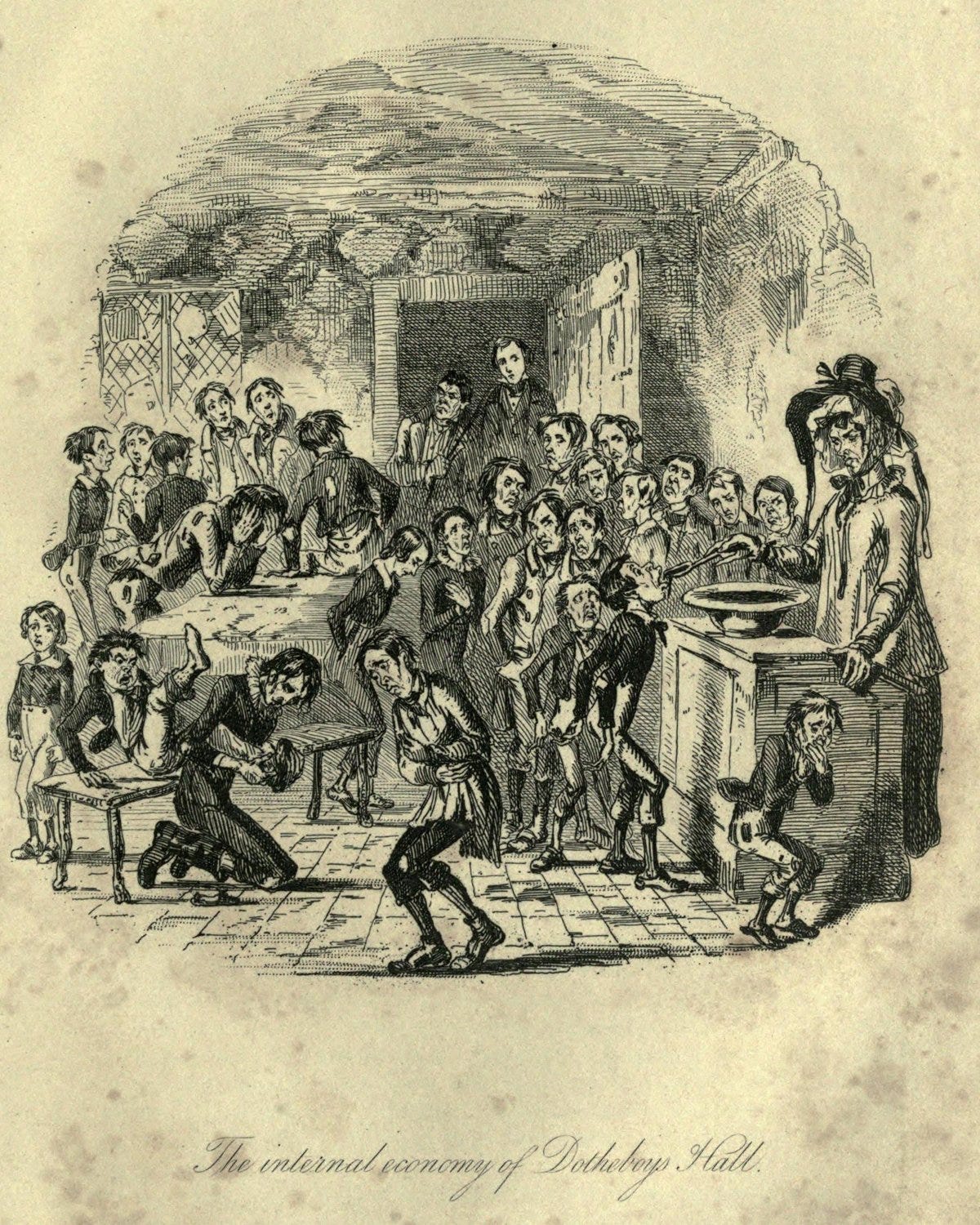
Next in order, and quite too numerous, are the schools of the Squeers sort. Well, not exactly in all respects deserving that epithet; for cruelty of the sort practiced by the Yorkshire pedagogue could not exist in our country for a week. We mean schools gotten up by individuals, or run by them purely and solely with a view to making money:— the principal being the purveyor and business man of the concern, and the teachers as few as it is possible to get on with, making any show before the community, and procured at a compensation but little removed from that of a day laborer. You see their advertisements daily with “damnable iteration,” and there are certain ear-marks even in their advertisements by which they are at once stamped so as to be unmistakable. Parents are advised to send early, lest the school be filled in advance of their application. As anybody can get a reference which costs nothing — for it is a harsh thing to refuse a fairly dressed man in your own community, particularly about election-times — a list of references is usually subjoined; subsequent small announcements appear, stating that there are vacancies for two, four, six or eight more pupils: catalogues are distributed very lavishly, in which the religious and moral influences of the localities are lauded to the starry heavens: a large and extensive library is spoken of, usually either not existing at all, or else made up of dilapidated Sunday-school books and tracts, eked out by census, patent office, and post-office reports, with some stray volumes of congressional reports, and a few geological surveys. Such men are very apt to boast of a philosophical apparatus, consisting, in fact, of a wheezy air pump and an ineffectual galvanic battery. There is always an imposing array of teachers’ (we beg their pardon, of professors’) names: said professors being largely made up of professional gentlemen of the vicinity, who never make, and never are expected to make, an appearance at the school, but who think it tells well at a distance to have their names in the catalogue; and there is always to be found in such catalogues, the favorite preacher, who being “such a sweet man,” does up the aesthetical part of the business for this and probably an adjoining female accomplishment manufactory, until his collapse, which generally takes place in due time. These institutions are simply and plainly pretentious frauds; and they do this ineradicable harm, if no other, to the boys who frequent them, that the pupil, seeing his pretentiously pious, always moral in appearance, at least, and sometimes Reverend instructor, sham and lie in print, comes to the conclusion that his own verbal lapses from strict truth are by comparison mere peccadillos. Boys are shrewd and unerring judges of anything within their sphere, and he has to be such a hypocrite as the world never yet saw, who can go long undetected by them, while occupying the position of their teacher. The phrase is a current one, “lying as a tomb-stone,” but it might well be varied so as to read: “mendacious as an Academy’s Catalogue.”
Yet another class of schools preparatory for college, put the price of board and tuition at a rate not more than sufficient to pay the commonest board, trusting to the numbers that such an inducement will persuade to attend, and to the almost unlimited “Extras,” which may be and are stuck on at every step. Any study beyond reading, writing and arithmetic called “ciphering,” is an “Extra;” washing, lights, matches, fires, mending, wear and tear of room, chalk, ink, paper, etc., etc., etc., all extra. The principal and teachers are of one or the other of the two classes above shadowed, and more frequently of the latter than the former; and the main idea is to keep pupils as long as possible, so that the most may be made out of them.
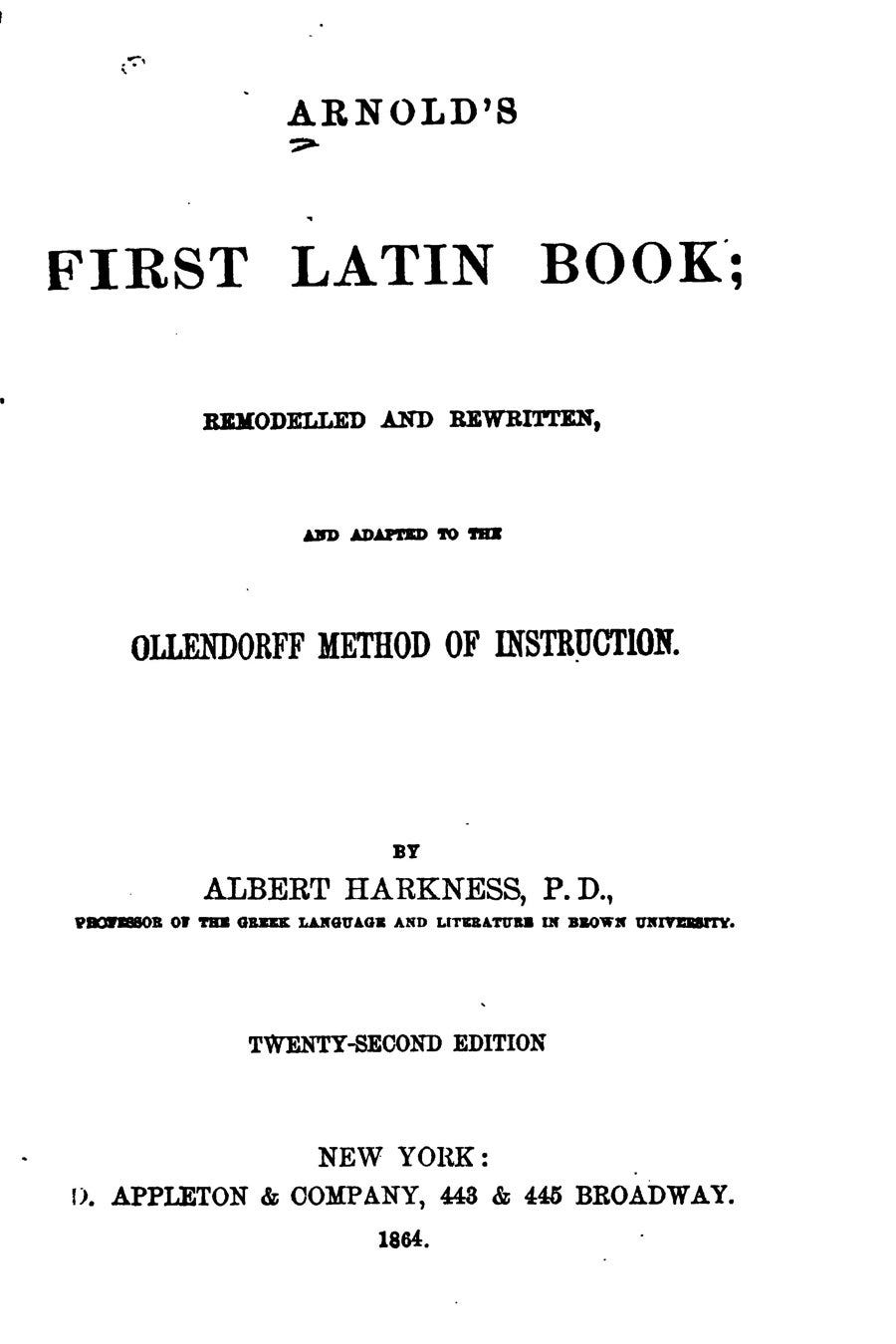
A boy who stumbles at every third word or so in reading, and who cannot by possibility understand one tenth of what he reads, is thrust into English Grammar, Natural Philosophy, History, Analysis of Words, it may be, and very likely into a class in Latin, studying from a text-book which happens to be in vogue at that special place. If there be a stray Frenchman loose around the house, the pupil is made to study Ollendorff’s or some equivalent system. Should such an one not exist, the principal’s wife, or some female relative who has graduated (forsooth) at a female Academy, and who teaches the language “after the school of Stratford atte Bowe,” answers the purpose just as well, and there is the superadded advantage in this, that she also thrums somewhat on the guitar, or tinkles the clattering piano, when, of course, her competency as a music teacher is unquestionable.
With this statement of the mode in which many schools are commenced, of the motives which practically animate their principals, and the kind of teaching material, it need not surprise us that so many of our boys taken from academies and schools of that grade seem to have learned little or nothing; that they neither read nor spell well; that their general information is so exceedingly defective, and that those who learn Latin and Greek grammar seem, for the most part, to have hardly the remotest conception of the use of the cases, of tense or of voice, nay, even of number and person!
Those who learn Latin and Greek grammar seem, for the most part, to have hardly the remotest conception of the use of the cases, of tense or of voice, nay, even of number and person!
It would be absurd to expect from boys so thoroughly at sea in the elements even a fair idea of idiom. Nor is the classification so universal but that we know some good schools to exist (especially when Religious Orders, or Catholic clergymen, have the duty and see to the teaching, and of these we do not now speak,) and, no doubt, such are to be found; but those in whose way it has fallen to examine many of their pupils, must come to the conclusion that good schools are rare, and in number very few. The already mentioned sectarian or local prejudice, blatant pretension, diligent advertising and skillfully worded clap-trap, have so great an effect on the average American, that the day is carried, and the school which imparts no acquisition of any permanent worth will succeed in numbers, the kind of success that is wanted by those in charge; while the genuine one, where it exists, proffering no easy methods, pursuing solid studies, acquiring them carefully and accurately, and making use of no specious pretense “ad captandum,” dwindles in numbers, or at best barely maintains its ground; but the only success that the community can fully appreciate, fails it utterly.
It follows from what has been said, that such of these boys as are intended for college come up to the institution, when they are to be matriculated, at all stages of preparation, or rather want of it; and though there is at most of our higher grade colleges an examination for admission, the literary acquirements necessary to succeed are even on the showing of their catalogues barely nominal, and how wretchedly soever the candidate may be prepared, experience proves to us the rarity of failure. At West Point, and at Annapolis, on the other hand (which cannot, however, strictly be called literary institutions, classics being taught in neither), from the obvious fact that neither the institutions themselves, nor the fees of the Faculty, nor their hold upon the public, depend in any regard on their numbers, a very large proportion of the young men described fail in the literary requirements, meagre as they are.
(To be continued.)
Note
[1] We carefully refrain from saying, in this paper, anything of the knowledge of Hebrew imparted in some Theological Seminaries, barely premising that those who know Hebrew, and know these institutions, estimate them at a considerably lower value than do the weak old ladies, and weaker men, who club together to advance young men, generally their own personal kith and kin, to acquire therein the mental pabulum deemed necessary to launch them upon a congregation. This is more particularly true of the various sects, which advance means very promptly for the object of aiding “indigent young men with a call to the ministry.” Unfortunately enough, the subject is one that, for obvious reasons, almost precludes the possibility of going into details; yet the facts will hardly be impugned, unless by those whose zeal outruns their discretion, and whose knowledge of classics is not even of sufficient extent to enable them to have an inkling of how much they do not know.
✠