



by Jonathan Buttaci

“Today, the world of education faces a number of urgent challenges.”
—Leo XIV, Magnifica Humanitas 143
These remarks were given on September 14, 2026, as part of the Third Annual Forum on the Catholic University, sponsored by the Center for Catholic and Dominican Studies at Providence College. This year’s theme was “Magnifica Humanitas and the Future of Higher Education.” The remarks have been revised for publication in the ACQR.
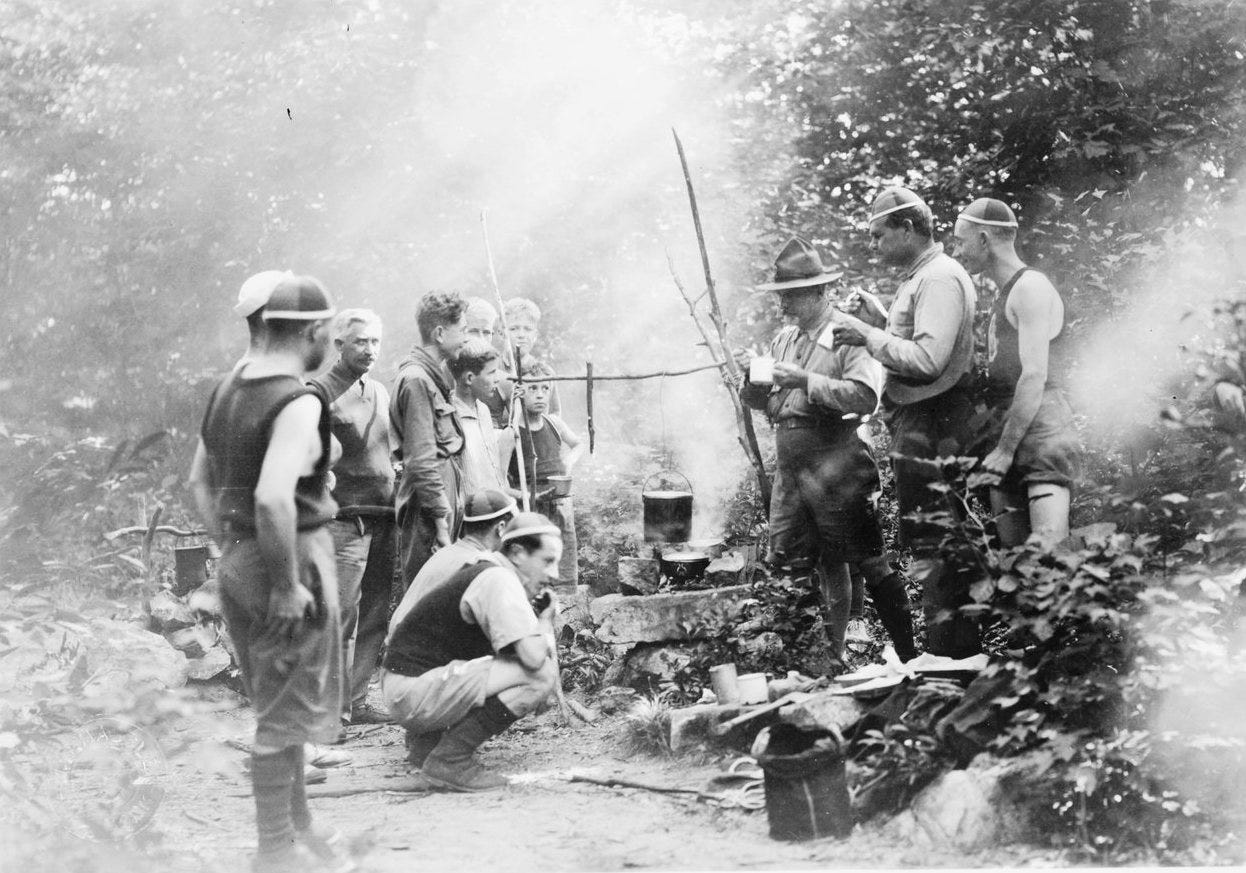
Much of my thinking about education has been shaped by the scouting movement. Its emphasis on preparedness, concrete field experience, and small peer-led teams has been incredibly successful in forming generations of youth. It is one of the few places where young people can practice virtues and life skills in a controlled laboratory where stakes are relatively low and coaches are ready to hand. After all, it’s both awkward and risky to learn to cook by cooking, to climb by climbing, and even to lead others by leading others—mistakes abound! Such mistakes are even more dangerous, we might think, when we seek to become virtuous people by performing virtuous actions. But this is the only path to becoming cooks, climbers, leaders, and virtuous people withal, rough though the road may sometimes be. In every case, the character of those early activities shapes the character of our lives, in one way or another, for better or for worse. As with so many things, the scouting movement just isn’t what it used to be; it has become less potent and less prominent precisely as it has become more necessary.
But I wasn’t invited to speak about scouting. I chose to begin here because scouting was not only the first battlefield on which I learned to cook and be courageous, but also the first theater in which I began to reflect more deeply and more theoretically (but not more abstractly) on the whole process of human formation. Scouting supplied the most concretely credible phenomena from which I tried to develop an account of human nature and a theory of education, however awkward or immature my theoretical reflections might have been at the time. It’s risky, but we also learn to theorize by theorizing.
Given my experience with and commitment to “learning by doing,” even as a young scout, imagine how delighted I was to discover these words of Aristotle’s as a college freshman: “the things we have to learn to do, we learn by doing them” (Nicomachean Ethics II.1). [1] And yet, as Aristotle laments:
Most people do not practice these acts but instead take refuge in theory (logos) and … act somewhat like patients who listen attentively to their doctors but do none of the things they are prescribed to do. As the latter will not be made well in body by such a course of treatment, the former will not be made well in soul by such a course of philosophy. (Nicomachean Ethics II.4)
I latched on to Aristotle (and later, in a different way, to John Henry Newman) because he insists that our theories—perhaps especially our theories of human formation—be both answerable to concrete phenomena and concretely practicable, even if not what we might call, in some narrower sense, practically useful.
Given my own turn of mind, then—or, if you prefer, my own axe to grind—imagine how delighted I was to discover these words of Pope Leo’s in his first encyclical earlier this year:
When some objected that the Church should not waste energy on worldly matters … Leo XIII responded with realism and wisdom, saying that the proclamation of the Gospel cannot overlook the concrete lives of people. (Magnifica Humanitas 3) [2]
Or, as Aristotle puts it:
Arguments (logoi) … are less reliable than works, and so when they speak against how things are perceived, they are despised and discredit the truth as well … but true arguments (logoi) seem most useful, not only with a view to knowledge, but also with a view to life. (Nicomachean Ethics X.1)
So, as an Aristotelian and lifelong scouter—someone who prefers concrete life to abstract theory—when asked to speak on Magnifica Humanitas and the wider challenges AI brings to higher education, I find myself asking: What are the pedagogical phenomena, those concrete realities of life in higher education, about which we are seeking true, credible, and practicable arguments? What are some of the “urgent challenges” (MH 143) that we face as professors, about which “we cannot limit ourselves to … abstract analysis” (MH 216; cf. 34, 106, and 153)? Or, still more provocatively: What sorts of strategies and arguments, especially for liberal studies, so evidently clash with the concrete experiences of students (and their parents) that they are despised or otherwise dismissed out of hand?
Pope Leo has much to say in this lengthy encyclical about a number of pressing social concerns, but I think his most important contribution to our conversation about Catholic higher education lies not principally in the details but rather in a fundamental reorientation regarding the sort of agency we are called to exercise, whether we are building Babel or Jerusalem. This frame has peculiar implications for higher education. To appreciate this, I’d like to identify some challenges that, in my view, educators have always faced, even before the coming of Christ and certainly before the advent of generative AI, but challenges which AI now sharpens in particularly clear and pressing ways.
✠
Dedicated teachers have always sought to engage their students, which is to say, to prompt students’ own engagement with the concrete objects of study. Aristotle tells us, after all, that we learn by doing the things we are learning to do. According to this approach, then, all knowledge is, in a way, know-how; even theoretical knowledge sought for its own sake—for example, in math, physics, or theology—is directed toward some sort of thoughtful and knowing activity, whether it be drawing a geometrical diagram to explain some feature of triangles or constructing an astronomical model to explain the cause of a lunar eclipse. To be sure, in these disciplines we are seeking knowledge for its own sake, but when their receptive and theoretical character is emphasized, there is and has always been a temptation to take flight into abstract theory and vague speculation. This is partly because it’s easier, for students and teachers alike, to remain at the level of abstract theory. It’s also safer, since it’s risky to give students the freedom to do it for themselves (whatever “it” may be).
This risk comes most of all in the concrete details, where students are most likely to go astray in articulating and realizing things for themselves. But just as scouts undercook or burn pancakes on their first campout, so too learning by doing is perilous and will inevitably involve some risk of missteps and mistakes. There is no other way to learn, if it is to be a real and substantive achievement.
In view of these risks and opportunities, even or perhaps especially in highly specialized domains, colleges and universities might aspire to be controlled laboratories with experienced coaches. This would likely require small tutorials or seminars instead of large lecture classes. Assessments would need to be more dynamic (and more time-consuming), for example, oral exams or extended research projects with several stages of composition and revision. This would take a different shape in different fields, to be sure, but a properly personalist approach to higher education—one that emphasizes what Newman called “personal influence” [3]—would require frequent and individual interaction with faculty mentors. This would take considerable time and energy, but restoring the place of human formation in collegiate studies promises to make liberal education more defensible and even attractive to students (and perhaps also to their parents).
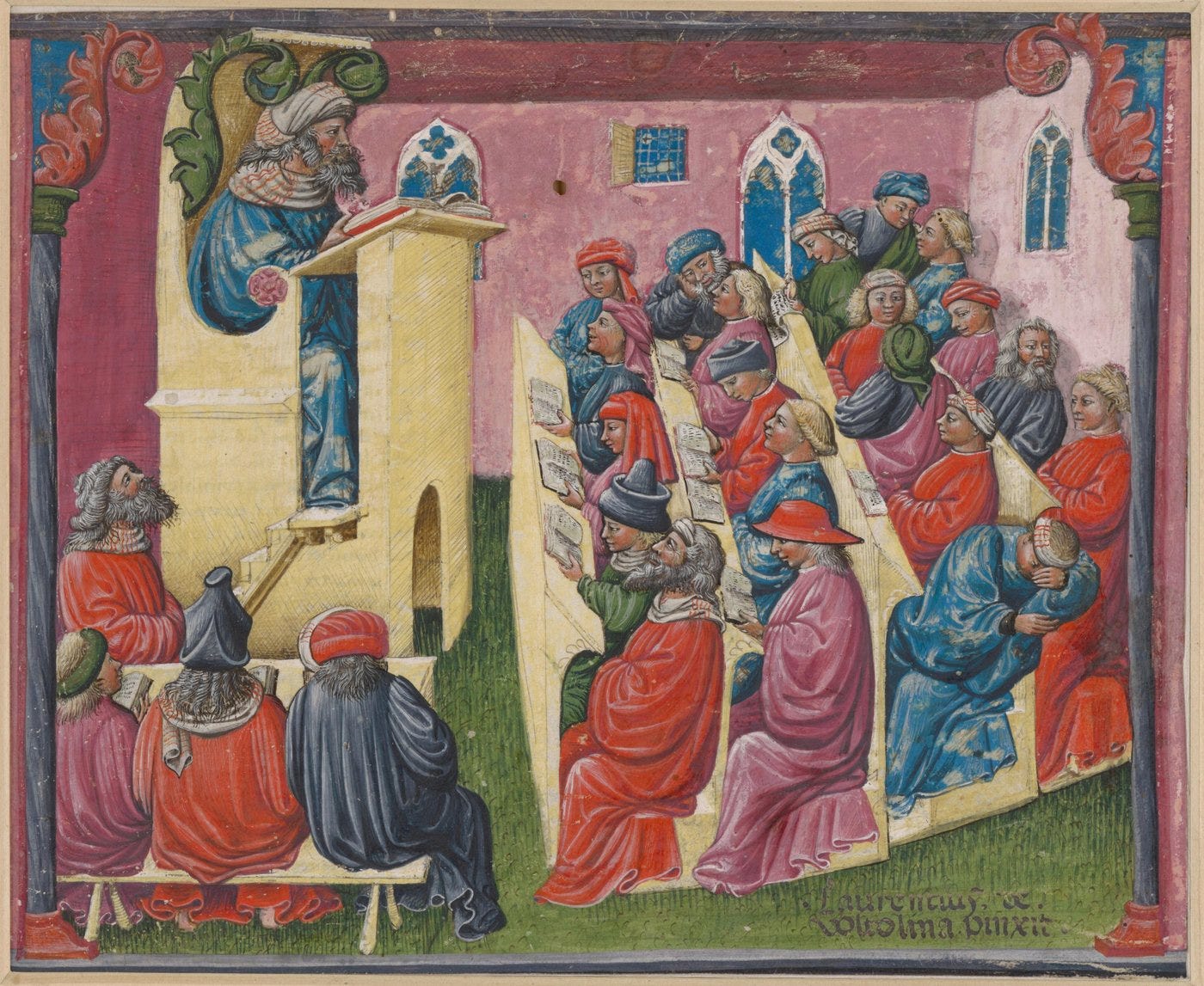
To put the point more negatively: these days many college courses, even those in liberal and humanistic disciplines, have become far less personal, and their students far less engaged. The reasons for this are various and complicated, but whatever they may be, the trend strains the credibility of arguments in defense of liberal studies; students’ experience often clashes with their courses’ lofty claims. Lectures (as someone once quipped) risk becoming a communication from the notebook of the professor to the notebook of the student without passing through the mind of either. [4] Pedagogical buzzwords like “instructional delivery” and “content transmission” have now become common, suggesting an impersonal pedagogy where students are passive mailboxes and knowledge is a package that has to be delivered before its “content” can be opened. I think speaking about education in these ways has always been misleading, but it is now especially dangerous with the advent of various forms of AI and the virtual infinity of content it can “deliver,” content that is easily transmitted, at least in some respect, but not easily received into anyone’s mind.
Leo himself notes this difficulty when recommending caution and restraint in using AI tools:
Education, by contrast, is a long journey requiring patience, and therefore needs time for development and for engagement with reality beyond appearances. This is a fundamental issue because every technology shapes those who use it. Educating people about the use of AI, then, involves teaching them to decide when and for what purpose it ought not to be used. The speed and ease with which answers or summaries can be obtained risk extinguishing the desire to ask questions, which is a process that bears fruit only over time. As Plato wrote, the deepest and most important things are learned only after much time and effort, by engaging in discussion with others, “striking upon” ideas and experiences together like flint until the spark of understanding is kindled within us. (MH 140)
If Pope Leo is right, and colleges and universities are to be places where “the deepest and most important things are learned,” then there must be sufficient opportunity for “discussion with others” under the personal influence of trustworthy guides. In higher education at large, however, we have already been experiencing a pedagogical shift away from sparking students’ “engagement with reality beyond appearances” toward something less personal, in part because it is less costly. Many professors have been under considerable pressure to “scale up” courses and programs, for example, by moving lectures online or even recording “content” so that it can be reused from year to year. There are understandable financial reasons for this. Now that AI is on the scene, though, I fear that the more colleges and universities aim to “deliver instruction” in ever more efficient ways—that is, the more college educators adopt a pedagogical strategy that facilitates “content transmission” from notebook to notebook without any chance of it “striking upon” or settling into a student’s mind—the more vulnerable these institutions will be to replacement by far cheaper delivery “agents.”
In a related way, dedicated educators have also always sought to cultivate students’ agency and independence as they come to master an area of study. I’m by no means the first to concede that AI can be a powerful and even salutary tool in the hands of someone prepared to use it well. It becomes a problem—again, as almost everyone admits—in our “passively succumbing to [its] influence” (MH 145). To put it a different way, I don’t want my students to be a product of their environment, still less of whatever technology they use or social media they consume. Rather, I want their environment and technological engagement to be a product of them. [5] Throughout Magnifica Humanitas, Pope Leo emphasizes not only the concrete realities of life and the time it takes to appreciate them, but also our agency, that we not passively succumb to these new things (res novae) but actively build amidst them. In other words, the question is not whether we are supposed to act as agents, as builders, but how we ought to build and to what end. Pope Leo captures this in the document’s framing conceit, the Tower of Babel versus the walls of Jerusalem.
There is also, to my mind, another interesting and difficult pedagogical tension, one that is generated by a need for both breadth and depth in education. With the rise of technical specialization, accelerated in these latter days by generative AI, students need training in depth, a stable and dynamic competence in some field. And yet precisely when depth is becoming ever more necessary—especially to become those engaged intellectual agents I’ve just described, not to mention to remain competitive in the job market—there is an equal and opposite need for students to be acquainted with a comprehensive and integrated whole, within which their studies can be situated. This difficulty is typically underestimated or overlooked, I think, though its twin poles are often affirmed in a single breath: students need depth and high-level knowledge, on the one hand, and an integrated view of the whole, on the other.
There is a real tension here that merits both philosophical and theological reflection. While I cannot adequately address it on this occasion, I suggest that it’s one reason why certain canonical texts have become enshrined in every intellectual tradition, non multa sed multum, that is, studying not many things but few things with much depth. There are certain topics and texts that contain within themselves the heart of the whole, and when we study them deeply, we can achieve a comprehensive and synoptic view. This is certainly what the order of study proposed in Plato’s Republic sought to accomplish, for example. Though I cannot begin to defend the claim here, my sense is that the best of the pre-Christian tradition sought to navigate this breadth-and-depth problem by finding curricular cornerstones the study of which would yield depth without narrowness, breadth without superficiality.
Without a more concrete grounding, however, over time the pagan tradition often fell into abstract theorizing and even skepticism, if not (at the other extreme) idolatry or corporeal indulgence. This is why Pope Leo’s reminder of the centrality of the Incarnation—at the very start of his encyclical—is so important. The person of Jesus Christ is infinite uncreated being, the incomprehensible Word of God, who nevertheless became a particular man with a particular mother in a particular town at a particular time. Here we have, with the assurance of divine revelation, a paradigm and exemplar of the most humane pedagogy, as Augustine eloquently describes on a number of occasions. [6] To be sure, not every study need be explicitly theological, but the fact of the Incarnation elevates and fulfills these breadth-and-depth aspirations of pagan studies while avoiding their pitfalls: Christianity teaches that Christ quite literally incarnates and concretizes the divine theory (logos).

That’s the first of three important Christian and Augustinian reminders that Pope Leo offers us, connected to the last of my challenges. The second concerns my first challenge, the risk of education and of letting students get it wrong, of giving them the space to make mistakes in a controlled laboratory as they learn by doing what they’re learning to do. So many students are driven to inappropriate use of AI tools out of a fear of failure, often at tasks they are insufficiently equipped to perform. I suspect this is because higher education has already become impersonal and inhumane in a number of ways, even before the advent of generative AI. If we are to heed Pope Leo’s advice, we will have to learn again the patient and ongoing work of education, which includes learning how to tolerate certain errors in view of a greater good to come. Seeing education as a special kind of cultivation means that teachers sometimes tolerate the weeds, not out of incapacity or indifference, but out of a certain pedagogical magnanimity, knowing the wheat is still growing alongside them but remains fragile.
AI only intensifies these perennial demands of education: dynamically navigating students’ weaknesses, uncertainties, and even failures. With AI we see that this fear-driven temptation toward perfection, efficiency, and control has reached a fever pitch. As Leo puts it:
More gravely, the pervasive technocratic paradigm in which we are immersed, and that is amplified by the digital revolution and AI, threatens to normalize an anti-human vision. In that vision, the fullness of life is equated with having more, reducing weakness, eliminating uncertainty and exerting total control. When efficiency becomes the ultimate measure of value, human beings are tempted to see themselves as a project to be optimized rather than as persons called to relationship and communion. (MH 112)
Again, the best of the ancients sought a more magnanimous and humane pedagogy, one willing to take a risk on the student’s freedom; the Incarnate Word’s preaching, cross, and resurrection now fulfill and realize those pagan aspirations in a still more reliable way. And, just as before, though not every lesson will be theological, a Christian’s classroom is forever changed, in every area of study, by the magnanimity of the cross and the patient pedagogy it models.
In the third place—and this is implicit in that magnanimous approach—Pope Leo reminds us of the agency required in Christian education, an agency that is not imposed from without but must be grown and cultivated from within. We are not to be passive spectators, nor are our students; the best theoretical studies are not disembodied and abstract but real and incarnate, answerable to concrete things that we can examine along with our students, thoughtfully engaging with and explaining the phenomena together. Perhaps one important lesson for educators will be to regard education itself as a process of cultivation and empowerment, seeing knowledge as the right kind of power, “mastery” in some suitable sense of that term.
Here opens a promising topic that Pope Leo left implicit and undeveloped, though it invites deeper reflection: not only did the Divine Word become incarnate, but he also empowered his followers to teach and sanctify in his stead. The power revealed and conferred on man at Pentecost does not violently impose order and uniformity, as the builders of Babel perhaps intended; rather, it invites and communicates while preserving human freedom and diversity. Most importantly, at Pentecost humanity itself is transformed in a new and trustworthy way; as Leo suggests, in the Spirit man finds the only aspiration to be “more than human” that is not, ultimately, dehumanizing (MH 126–27).
Colleges and universities are uniquely situated to serve young people at a critical moment, if they choose to prepare and empower them in these concrete and personal ways. Given our intellectual tradition, and also this divine commission, Catholic institutions are especially well equipped to lead the fight against these several depersonalizing trends, these urgent educational challenges. So, as at its founding centuries ago, perhaps the modern university can find its most humane ambitions fulfilled rather than frustrated in the Church. Yet we might think that higher education, like scouting, is also becoming less potent and less prominent precisely as it becomes more necessary. With that in mind, one can end in no better place than Pope Leo’s own hopeful call to action in the face of these challenges:
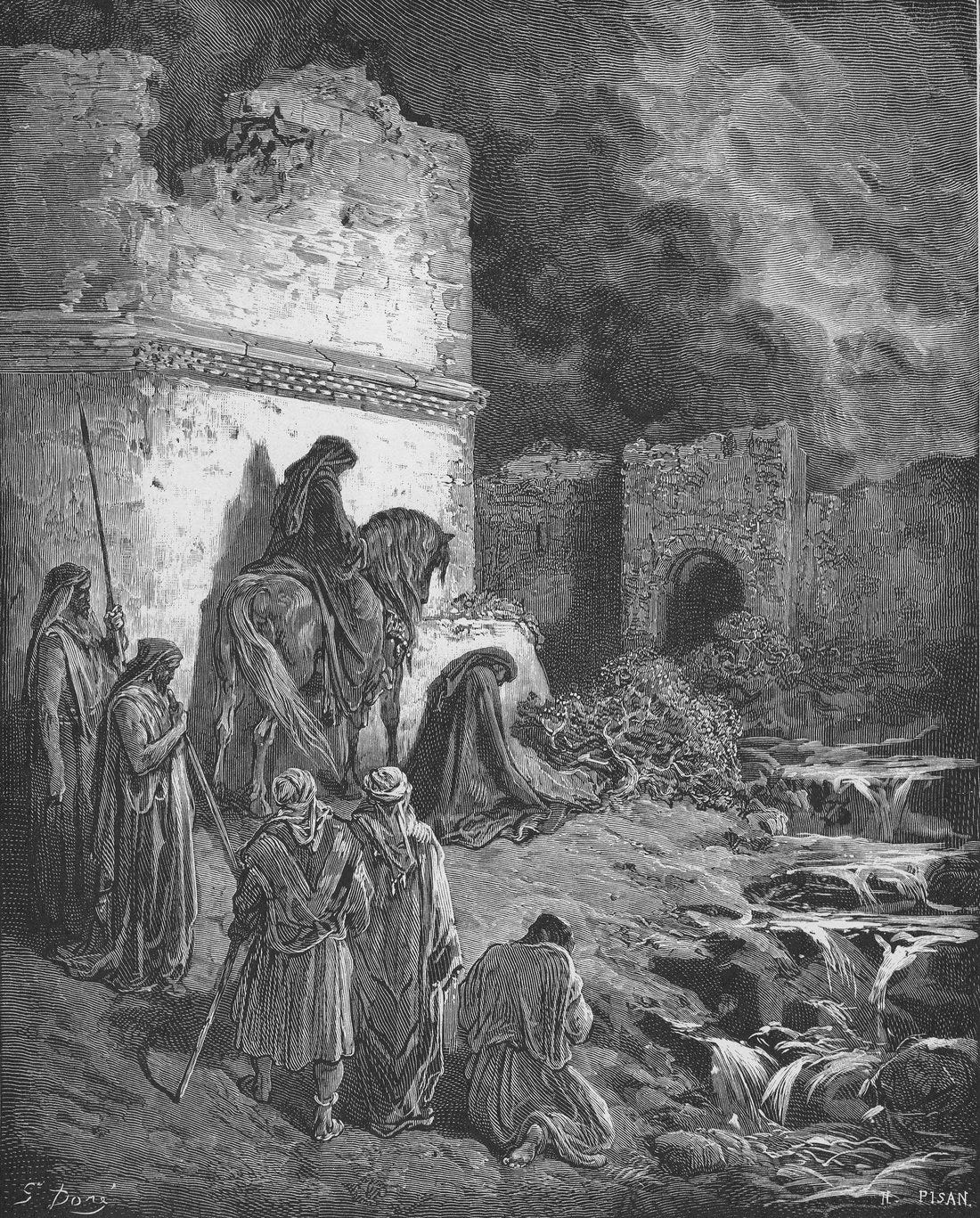
In this era of digital transformation, I see in [Nehemiah] a striking parable of our own vocation, which is not to be passive spectators of social and cultural fractures, nor mere commentators on what is crumbling, but men and women prepared to enter the construction sites of history—research laboratories, technology companies, schools, the media, institutions and local communities—in order to rebuild what has collapsed and protect what is threatened. (MH 241)
Jonathan Buttaci is an Associate Editor of the American Catholic Quarterly Review and Associate Professor of Philosophy at The Catholic University of America.
Notes
[1] I modify Ross’s translation of Aristotle’s Nicomachean Ethics, both here and in the quotations that follow.
[2] In citing Rerum Novarum 22 in his endnote 4, Leo XIV seems to have this line in mind: “The chief and most excellent rule for the right use of money is one the heathen philosophers hinted at, but which the Church has traced out clearly, and has not only made known to men’s minds, but has impressed upon their lives.”
[3] See, e.g., the fifth of Newman’s Oxford Sermons or the sixth chapter of his Rise and Progress of Universities.
[4] See, e.g., Fulton Sheen, Treasure in Clay, p. 54. The line itself is taken from earlier authors and is sometimes wrongly attributed to Mark Twain.
[5] Recall Frank Costello’s (Jack Nicholson’s) opening line in Martin Scorsese’s The Departed (2006).
[6] See, e.g., Confessions VII.
Images: Pieter Bruegel the Elder, The Tower of Babel (Kunsthistorisches Museum, Vienna); Library of Congress, Prints and Photographs Division; Kupferstichkabinett, Staatliche Museen zu Berlin; Gustave Doré, La Grande Bible de Tours. All public domain, via Wikimedia Commons.