



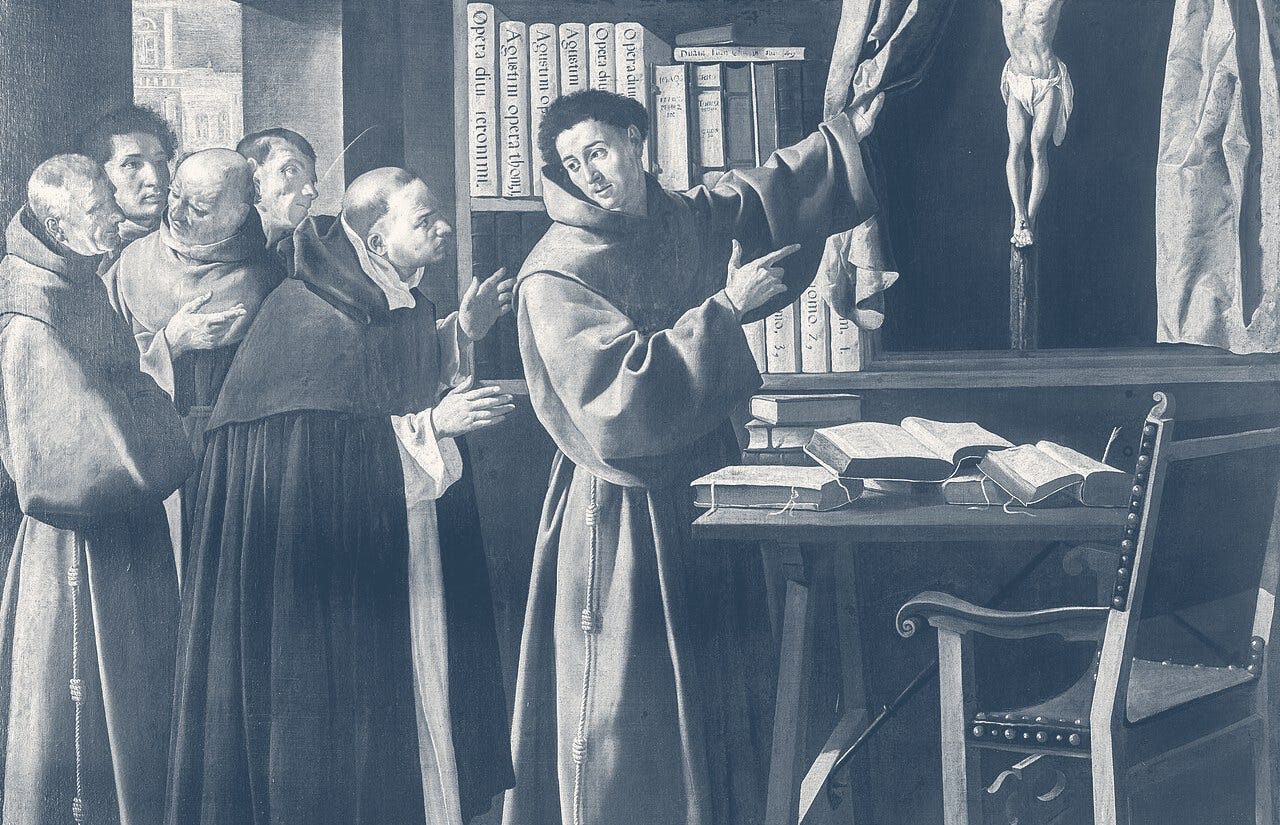
From the Editor. In October the Review observed a Francis week for the 800th anniversary of the saint’s death, which Joshua C. Benson opened with “Everybody’s Francis.” He returns today with a guide for readers who want to continue pondering this great saint. The closing words of his Canticle of Brother Sun are especially fitting for this week of rengratiamento:
Laudate e benedicete mi’ Signore et rengratiate
e serviateli cum grande humilitate.
“Praise and bless my Lord and give him thanks,
and serve him with great humility.”
READING FRANCIS
Joshua C. Benson
Associate Professor of Historical and Systematic Theology, The Catholic University of America; Associate Editor of the Review
In the wake of the celebration of the 800th anniversary of the death of Saint Francis, some readers may be wondering: how do I learn more about Saint Francis? Where can I find Francis’s writings and the writings about him? Are there good contemporary guides to his life? In this brief review, I will provide a small road map, perhaps an itinerarium, for those who want to study Francis further. My comments are not exhaustive and come only from the store of my own teaching and research. They are meant to serve those who are just finding an interest in this great saint.
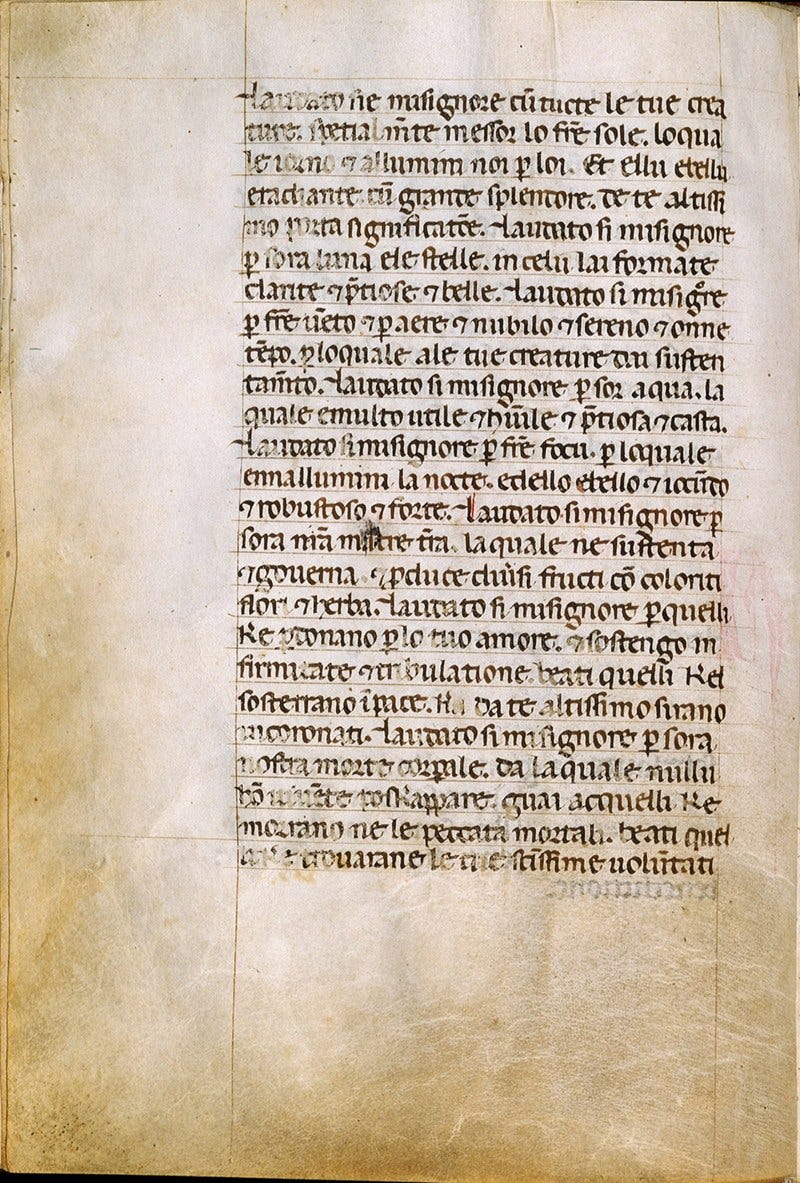
It is worth recalling at the outset that making collections of Francis’s works, and of the works about him, is an old business. The most ancient collection of Francis’s writings, together with some of the writings that tell his story, can be found in Assisi, in a manuscript known by its shelf mark in the ancient library of the friars’ home, the Sacro Convento: Assisi 338. [1] The collection of Francis’s works in this manuscript was likely put together between the 1240s and 1260s, not many years after Francis’s death in 1226, during a period when the friars were working hard to preserve his memory for future generations. This ancient collection is a precious witness to the writings of Francis and contains many, but not all, of the saint’s authentic writings. In one place, the manuscript preserves Francis’s famous song, the Canticle of Brother Sun, entitled in Assisi 338 Laudes creaturarum. The scribe has noted that Francis was sick and at San Damiano when he composed these “praises of creatures.” A space is tantalizingly left for the musical notation of Francis’s song, but none was ever recorded.
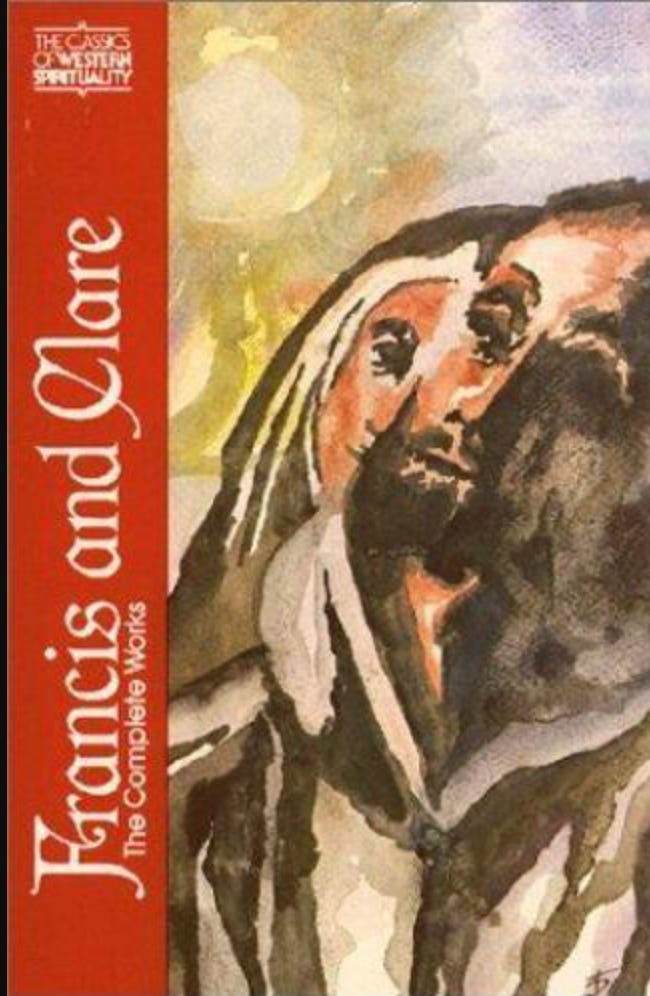
Collections of Francis’s writings continued to be made for centuries, by hand in manuscripts and eventually by machines in early printed books. During the twentieth century, scholars produced critical editions of the Latin texts by and about Francis in various scholarly publications. [2] The translations we use to teach classes and to read Francis for pleasure (if we cannot read Latin) derive from these academic works. The first place to go today, if one is looking only for the writings of Francis in English, is the widely available collection from Paulist Press, Francis and Clare: The Complete Works (New York: Paulist, 1982). The translations and introductions were completed by two of the great Franciscan scholars of the twentieth and twenty-first centuries: Ignatius Brady, OFM, and Regis Armstrong, OFM Cap. Ignatius Brady (1911–1990) was one of the foremost scholars of medieval theology in the world. He produced various critical editions of medieval theological texts, studies of Franciscana, and related works. [3] Regis Armstrong, now in his eighties and still producing scholarly work, has been involved with the translation of Clare of Assisi, Francis of Assisi, and Bonaventure his whole scholarly life. [4] The collection Brady and Armstrong produced for Paulist Press is still readable and reliable decades later:
Regis Armstrong later helped spearhead another, much expanded collection of translated texts. The landmark series Francis of Assisi: Early Documents (FA:ED), published by New City Press, is the collection that any reader will want who desires the most current translation of Francis’s works, together with translations of most of the medieval texts about him. This collection, now in four volumes, was in part designed to replace a similar, earlier collection edited by Marion Habig, St. Francis of Assisi: Omnibus of Sources, published by Franciscan Herald Press in 1973. The FA:ED is an incredible resource. The volumes provide helpful introductions and notes to all texts, translations of additional documents that help contextualize Francis and the order he founded, and maps that help orient the reader to the geography of Francis’s world. There is no better place to begin a serious study of Saint Francis than the FA:ED. [5]
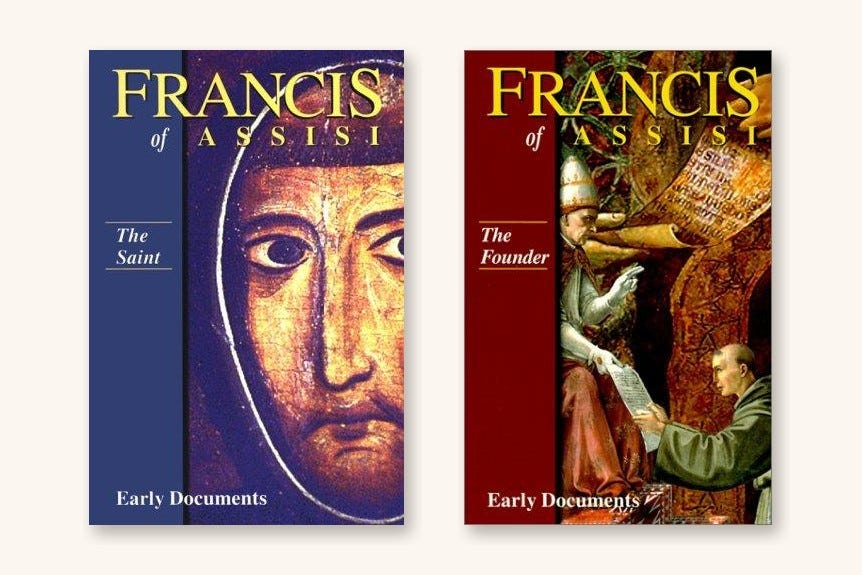
Most readers will find that the first two volumes of the FA:ED are the most important for their interests. The first volume contains all of Francis’s known writings and the very earliest hagiographic texts. Among these early texts is Thomas of Celano’s first life of Francis, produced around 1228 for Francis’s canonization. Little is known about Thomas himself, who died around 1260. He would become the most influential of the early hagiographic writers of the order, and he influenced Bonaventure’s later portraits of Saint Francis. Thomas probably entered the order in 1215 and was eventually sent to Germany. From his own words, we can glean that Thomas saw the marks of the stigmata upon Francis’s body on the night of Francis’s death. [6] Thomas’s Life of Saint Francis is a classic of hagiography, in which the life of a saint is interwoven with the narrative of Scripture and informed by theological and spiritual tradition. Athanasius’s Life of Antony and the Life of Bernard of Clairvaux seem to have been two special influences on Thomas’s portrait of Francis in this first life.
Liturgical texts used by the order are also provided in the first volume of the FA:ED, and so are three additional texts: a life of Francis written by Julian of Speyer, a versified life of Francis by Henri d’Avranches, and a most unusual text, The Sacred Exchange between Saint Francis and Lady Poverty. These last two texts deserve further comment. Henri’s versified life of Francis is little studied but perhaps deserves more attention than it has received, not because it adds to our historical knowledge of Francis per se, but because it displays how poetic insight and the Western poetic tradition exemplified by Ovid and Vergil can deepen our understanding of the figure of Francis. Henri was a skilled writer of verse, and his Versified Life of Saint Francis is considered his magnum opus. The Sacred Exchange, on the other hand, is notable as a piece of what can perhaps be reckoned “Franciscan Wisdom literature.” It is a challenging and beautiful text that describes the brothers’ encounter with the figure of Lady Poverty, culminating in a “banquet” they share with her.
Besides the first volume of the FA:ED, the second should also attract the attention of readers, because it contains all the works on Francis written by another great Franciscan saint, the Seraphic Doctor, Saint Bonaventure (1221–1274). Bonaventure was a close contemporary of Thomas Aquinas, and Bonaventure’s thought was at times a catalyst for Aquinas’s own. Bonaventure likely came from a wealthy family in Bagnoregio, Italy (a stunningly beautiful town). He studied the arts at Paris in the 1230s and 1240s, becoming a Friar Minor in 1243. He then took up the study of theology and produced major academic theological works as a master of theology. In 1257, what happened to most great medieval theologians happened to Bonaventure: he was called into administrative service, being elected Minister General of the entire Franciscan order. From this position he produced many of the spiritual works for which he is now famous, with the Journey of the Mind into God perhaps leading the list. As Minister General, Bonaventure also produced his Major Legend and Minor Legend of Saint Francis, his great hagiographic treatments of the Seraphic Father.
When Bonaventure wrote his Major Legend (legend here meaning something to be read aloud, not something “made up”) and his Minor Legend for liturgical use, he relied upon an impressive tradition of writing about Francis that had emerged in the 1240s. This tradition took form in a series of texts, some of which were composed at the request of Crescentius of Iesi, who, as Minister General of the Order of Friars Minor, asked the brothers to begin collecting their memories of Francis. These lively texts, which all precede Bonaventure’s own, are contained in the second volume of the FA:ED. They often afford a very personal glimpse of Francis, because they were written by his first companions, some of whom knew Francis as a boy in Assisi, long before he became a penitent and eventually a saint. These texts are the Anonymous of Perugia, The Legend of the Three Companions, and The Assisi Compilation. Each is a precious witness. Thomas of Celano, who wrote the first life of Francis, was then commissioned by the order to take all these remembrances and craft a new life. He did this around 1245 with The Remembrance of the Desire of a Soul, a long and intricate life of Francis. Thomas followed this text with a Treatise on the Miracles of Saint Francis. With all of these materials in view, but especially Thomas’s Remembrance, Bonaventure composed his Major Legend, achieving a synthetic theological vision of Francis the saint that became a standard point of reference for later generations. In fact, the famous cycle of paintings in the Upper Basilica of Saint Francis in Assisi, by Giotto and his school, takes direct inspiration from Bonaventure’s Major Legend.
The Franciscan hagiographic tradition did not stop with Bonaventure. Volumes three and four of the FA:ED display how that tradition continued, eventuating in texts like the one so many first find when they begin to read about Saint Francis: The Little Flowers of Saint Francis. Volume three contains ten texts in all. Volume four, meanwhile, runs to more than 1,700 pages, though it contains just one text: Bartholomew of Pisa’s The Conformity of the Life of Blessed Francis to the Life of the Lord Jesus. The text is as much hagiographic portrait as it is Franciscan encyclopedia. Most readers will not need to venture this deeply into Franciscana and can stick to the first two volumes of the FA:ED with great profit. Readers should also know, however, that another life of Francis came to light in 2014 and has since been published in a Latin edition and, in 2016, in English translation. The life is an abbreviated version of Thomas of Celano’s first life, made by Thomas himself at the behest of the order. This Rediscovered Life was identified and edited by one Franciscan scholar, Jacques Dalarun, and translated by another, Timothy J. Johnson. [7] Johnson, with a team of scholars, has also called further attention to the importance of the “prayed Francis,” that is, Francis as understood through liturgical texts and lives, which are often understudied. [8]
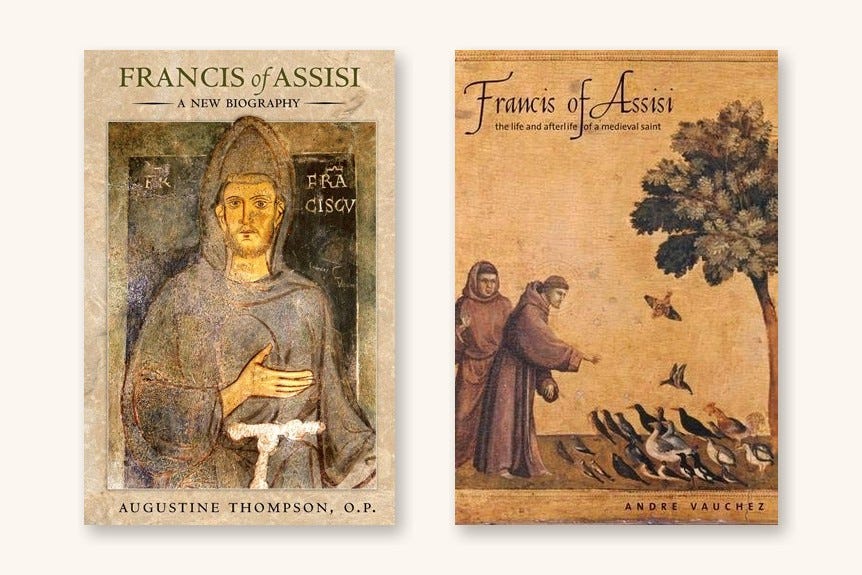
Where can readers go today to get help with the vast tradition around Francis in the four volumes of the FA:ED? Two books have been essential for me. The first is Augustine Thompson’s Francis of Assisi: A New Biography (Ithaca: Cornell University Press, 2012). The Dominican historian’s book comes in two versions, one with and one without endnotes. As a teacher of Franciscan materials, I have found the version with the endnotes indispensable. Thompson’s essay on the Franciscan Question is essential reading for understanding the lines of debate about how to understand Francis historically and how to use the sources about him. A second volume that deserves praise is André Vauchez’s Francis of Assisi: The Life and Afterlife of a Medieval Saint. [9] Vauchez is one of the leading European historians of the Middle Ages, and his life of Francis is a remarkable book. In addition to providing a historical portrait of Francis, Vauchez discusses the later hagiographic tradition and, in part four of his study, various themes in Francis’s writings. With these two guides at hand, much more of the scholarship and literature on Francis can be better understood. In suggesting these two guides, Thompson and Vauchez, I pass no judgment on the many other contributions to understanding this great saint. I note only that these two studies have been immensely helpful to me.
Happy reading.
Notes
[1] The manuscript can be viewed electronically at the following website:
https://www.internetculturale.it
. For a review of this manuscript and its importance, see Luigi Pellegrini, “The Transmission of the Writings of Brother Francis,” in The Writings of Francis of Assisi: Letters and Prayers, ed. Michael W. Blastic, OFM, Jay M. Hammond, and J. A. Wayne Hellmann, OFM Conv. (St. Bonaventure, NY: Franciscan Institute Publications, 2011), 21–50, at 25–32.
[2] The series in which many of the stories about Francis were originally published is the Analecta Franciscana. More recently the various Latin texts for Francis and Clare were gathered into a single collection, Fontes Franciscani, ed. Enrico Menestò and Stefano Brufani (Assisi: Edizioni Porziuncola, 1995). Work on these sources and Francis’s writings continues, and even more recent editions have been published by various presses. The most current edition of Francis’s writings in Latin, for instance, is Francesco d’Assisi, Scritti, ed. Carlo Paolazzi, OFM (Grottaferrata: Collegio S. Bonaventura, 2009).
[3] Perhaps Brady’s greatest editorial achievement was his edition of the four books of Peter Lombard’s Sentences. The Lombard, who died in 1160, was a student and then master at Paris before becoming bishop of Paris. His Sentences became the standard “textbook” of theology for many centuries.
[4] In addition to the work noted below, Armstrong has also translated the writings by and about Clare of Assisi from the Middle Ages in the collection The Lady: Clare of Assisi; Early Documents (New York: New City Press, 2006). He has recently published a translation of, and lengthy commentary on, Bonaventure’s classic work, closely connected to Francis, the Itinerarium mentis in Deum. See Into God: Itinerarium Mentis in Deum of Saint Bonaventure; An Annotated Translation (Washington, DC: The Catholic University of America Press, 2020).
[5] The texts found in these volumes can also be found at the website franciscantradition.org. Membership is free and grants access to the texts. For the print volumes, see Francis of Assisi: Early Documents, vols. 1–3, ed. Regis J. Armstrong, OFM Cap., J. A. Wayne Hellmann, OFM Conv., and William J. Short, OFM (New York: New City Press, 1999–2001). The fourth volume of the series is published as Bartholomew of Pisa, The Conformity of the Life of Blessed Francis to the Life of the Lord Jesus, 3 vols., ed. William J. Short, OFM, trans. Christopher Stace (Hyde Park, NY: New City Press, 2020).
[6] Thomas would seem to reveal this in his Treatise on the Miracles, chap. 2, par. 5, FA:ED II, 403.
[7] The Rediscovered Life of St. Francis of Assisi, trans. Timothy J. Johnson (St. Bonaventure, NY: Franciscan Institute Publications, 2016), available from Franciscan Institute Publications at www.franciscanpublications.com.
[8] See The Prayed Francis: Liturgical Vitae and Franciscan Identity in the Thirteenth Century, ed. Marco Bartoli, Jacques Dalarun, Timothy J. Johnson, and Filippo Sedda (St. Bonaventure, NY: Franciscan Institute Publications, 2019).
[9] Trans. Michael F. Cusato, OFM (New Haven: Yale University Press, 2012). I note here that Cusato is himself an excellent and well-published Franciscan scholar. His own very useful book on Francis is Francis of Assisi: His Life, Vision and Companions (London: Reaktion Books, 2023).
✠
The podcast Dr Benson did with Scott Hahn in Oct -Road to Emmaus podcast- on St Francis is a very worthwhile listen
https://podcasts.apple.com/us/podcast/the-road-to-emmaus-with-scott-hahn/id1461247838?i=1000796724663