


by Joshua C. Benson
The long and distinguished literary career of Orestes Brownson (1803–1876) ended with the beginning of the American Catholic Quarterly Review. In the journal’s first number, Brownson published “The Philosophy of the Supernatural.” [1] The essay is significant both for being Brownson’s last and for synthesizing his thinking on an issue that had become one of the most important to him as a Catholic: the critical distinction between the natural and supernatural orders, or between nature and grace.
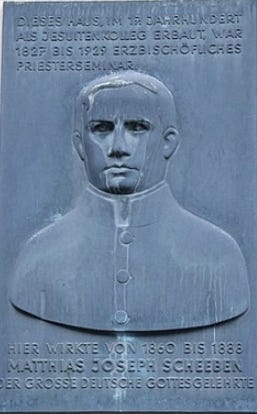
The nature/grace distinction has been a topic of current concern in Catholic theological circles. CUA’s own Fr. Vincent Strand, S.J., has recently published an essay reviewing the contours of this debate at the present moment, with a focus on a key nineteenth-century voice in the discussion, Matthias Joseph Scheeben. [2] Strand summarizes the controversy in the opening lines of his essay: “More than two decades after its reawakening, the dispute between Lubacians and Thomists over the relation between nature and grace remains contested. Does human nature, as Henri de Lubac claimed, intrinsically possess a supernatural finality? Or, as Thomists argue, is human nature in se ordered to a connatural end and receive a supernatural finality only by grace?” [3]
Theologians debated these same issues in the nineteenth century with great intensity, as Fr. Strand shows with respect to Scheeben. To my knowledge, Brownson has not been integrated into discussions of the nature/grace distinction, though he spent significant time considering the issue across various publications after his conversion to Catholicism. Perhaps a deeper exploration of Brownson on the natural and supernatural orders would reveal the usefulness of his position for the current debate. The perfect place to begin is with Brownson’s last essay.
Brownson articulates his final views on the question of the natural and supernatural orders by employing one of his favorite literary genres: the review. Consistent as ever, Brownson begins his review of Pietro Rossi’s Principii di Filosofia Soprannaturale by acknowledging that he has not “sufficiently studied” the four volumes of the projected five-volume study (I cannot comment here on where Rossi fits within the spectrum of views on the natural and supernatural orders; further study of Rossi and other Italian and French thinkers who informed Brownson would yield a fuller understanding of the nature/grace debate). The “review,” then, consists of Brownson’s own views, occasioned by Rossi, on the fact that there is a supernatural order and on how the natural and supernatural orders relate (Brownson’s articulation of these two orders and their relationship is intriguing to me for its possible connections to St. Bonaventure’s Breviloquium; I hope to explore this connection in a later essay for the ACQR).
On page twenty-six of the original essay, Brownson makes an assertion that seems to govern his whole position on human nature and its ultimate end. He writes: “We are laboring to prove that man in point of fact, is and always has been under a gracious or supernatural providence, and therefore, from the first destined to a supernatural end, attainable only through a supernatural medium.” For Brownson, the natural and supernatural orders form a seamless whole. Humanity, though by nature fit for a natural end commensurate with its finite nature, never existed in a state of pure nature. Rather, Brownson consistently affirms that humanity has been providentially created by God for a much greater, supernatural end.
As noted above, Brownson treated the distinction of the natural and supernatural orders multiple times as a Catholic. [4] Noting some of these places may be useful for those who wish to track Brownson’s thought. An early Catholic treatment comes in 1847, three years after Brownson’s conversion, in a piece published as “Natural and Supernatural. Remarks on a Letter from a Protestant Minister.” [5] The essay is not closely related to the themes of Brownson’s last essay, but it is worth considering.
A more developed treatment of the distinction occurs in 1855, eleven years after Brownson’s conversion, in a critical review of Aspirations of Nature by Isaac Hecker, Brownson’s close friend and fellow convert. [6] The nature/grace distinction forms one of the key dividing lines between these two great and interlinked nineteenth-century converts, and it may, again, show us more about this important theological distinction.
By 1857, Brownson had released his autobiography, The Convert; or, Leaves from My Experience, which detailed his conversion to Catholicism by reviewing the changes in his intellectual and religious life. The nature/grace distinction frames Brownson’s account of his life. In the prologue to The Convert, he writes that the purpose of telling the story of his conversion “is not to flatter one or another sect or party,” but rather
to enable the curious in such matters to discover the connecting link between my past and my present life, in order to enable them to discover the connecting link between nature and grace, the natural and the supernatural, and to perceive that, in becoming a Catholic, a man has no occasion to divest himself of his nature, or to forego the exercise of his reason. [7]
The Convert‘s last line states: “. . . but the real reason why we should become Catholics and remain such, is, because she is the new creation, regenerated humanity, and without communion with her, we can never see God as he is, or become united to him as our supreme good in the supernatural order.” [8]
A yet more in-depth statement of Brownson’s views can be found in another review, “Maret on Reason and Revelation.” The key section is from the second article; the review was published in Brownson’s Quarterly Review for 1857–8, the same time as the publication of The Convert. [9] A piece Brownson published for Catholic World in 1868 also further displays his thinking on this issue. [10]
The above list of works is only a beginning. If Brownson’s corpus is read through with the nature/supernature distinction in mind, many more pieces will likely turn up that contribute to our understanding of this theme. We may also begin to understand better how this distinction influences Brownson’s thinking on various subjects, such as the American Republic, the proof of God’s existence, and his general epistemology. It is hoped that the republication of Brownson’s last essay may elicit new interest in his thinking on this important theme.
Notes
[1] ACQR, January–October 1876, 22–33.
[2] See Strand, “Gratia Transfigurat Naturam: Scheeben and the Nature-Grace Controversy,” Modern Theology 42:2 (Apr 2026), 356–381. Brownson’s position seems to have certain affinities with Scheeben’s own, or at least may be fruitfully thought through with Scheeben’s distinctions in mind. Commonalities between the two men may partially arise because they both have the same opponent in view: those they refer to as rationalists.
[3] Strand, “Gratia Transfigurat Naturam,” 356.
[4] There is every reason to think that Brownson was already beginning to think about the distinction, though not in Catholic terms, while still a Protestant — as, for instance, in the essay marking his departure from the thinking of William Ellery Channing, “The Mediatorial Life of Jesus.” The essay can be found in multiple places, most recently in Seeking the Truth: An Orestes Brownson Anthology, ed. Richard M. Reinsch (Washington, D.C., 2016), 193–223.
[5] Originally from Brownson’s Quarterly Review for January 1847, the essay can now be found in The Works of Orestes A. Brownson, vol. 3, ed. Henry F. Brownson (Detroit, 1883), 1–17.
[6] Brownson’s Quarterly Review, New York Series, vol. 2 (New York, 1857), 459–503.
[7] I have cited The Convert from The Catholic Writings of Orestes Brownson, ed. Michael P. Federici (Notre Dame, 2018), 90–245, at 91–92.
[8] The Convert, ed. Federici, 245. At least the final three chapters of The Convert are useful for understanding Brownson’s approach to issues of nature/grace.
[9] The essay can be found in The Works of Orestes A. Brownson, vol. 1, ed. Henry F. Brownson (Detroit, 1898), 438–489, but especially 467–489.
[10] See Orestes A. Brownson, Selected Writings, ed. Patrick W. Carey (New York, 1991), 283–307.
Joshua C. Benson, Associate Professor of Historical and Systematic Theology and Historical and Systematic Theology Area Director, specializes in Medieval Theology. He has taught at The Catholic University of America since 2008 and served as Chair of the Department of Theology and Franciscan Studies at St. Bonaventure University from 2018-2020.
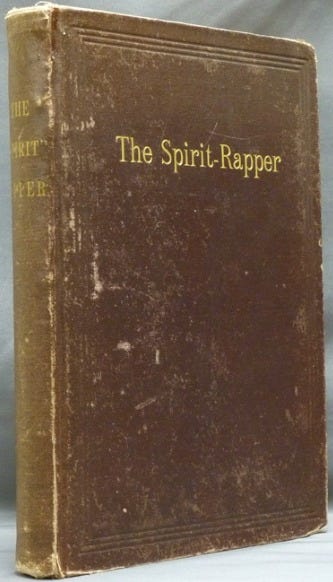
Brownson's 1854 novel "The Spirit Rapper" is much more than a commentary on spiritualism. A significant aspect of the plot is to show the connection between the Occult and socialism as well as what became known as modernism, res novae, the "New Things" mentioned by Pope Gregory XVI in Singulari Nos in 1832 and alluded to by Pope Leo XIII in Rerum Novarum in 1891. Brownson depicts the anonymous narrator as instrumental in bringing about the revolutions of 1848 in Europe, with the goal of worldwide revolution to establish the Kingdom of God on Earth. This is not unique to Brownson. Msgr. Robert Hugh Benson did something similar in his 1907 apocalyptic satire, "Lord of the World," while non-fictionally G.K. Chesterton equated socialism and modernism (G.K. Chesterton, “There Was a Socialist,” G.K.’s Weekly, May 10, 1930). Currently, the work of Dr. Julian Strube of the University of Göttingen demonstrates the link between esotericism and socialism as well.
My favorite line in this essay: “The Incarnation is the key to all the Creator’s works.”